
Balanced nutrition is not a list of prohibitions and not about ideal weight. It is four principles that WHO calls the foundation of any healthy diet: adequacy, balance, moderation and variety. Let's look at how they appear in an ordinary kitchen.
What WHO calls balanced nutrition
WHO states plainly: a healthy diet helps protect against both malnutrition in all its forms and noncommunicable diseases — diabetes, heart disease, stroke, cancer. Unhealthy eating, meanwhile, is one of the main risk factors for disease and disability.
The foundation is a variety of minimally processed foods low in unhealthy fats, free sugars and sodium. The exact composition of the diet depends on age, sex, lifestyle, physical activity, culture and which foods are available nearby.
Adequacy — enough nutrients, but without excess. Balance — energy from food matches expenditure, with a reasonable ratio of proteins, fats and carbohydrates. Moderation — limiting what does not benefit health. Variety — a broad range of foods within each group. And one more condition: food must be safe, without microbial and chemical contamination.
Food groups: what to keep at home
The simplest guide is five groups. Here is how they sound in the language of our kitchen.
- Vegetables and fruits — every day, varied. Fresh, frozen, canned and dried — all options, if without added sugar and excess salt. Juices and smoothies contain free sugars, so they are limited.
- Starchy foods — potatoes, bread, rice, pasta, grains. Among starchy foods, wholegrain options or potatoes in their skins are mentioned more often.
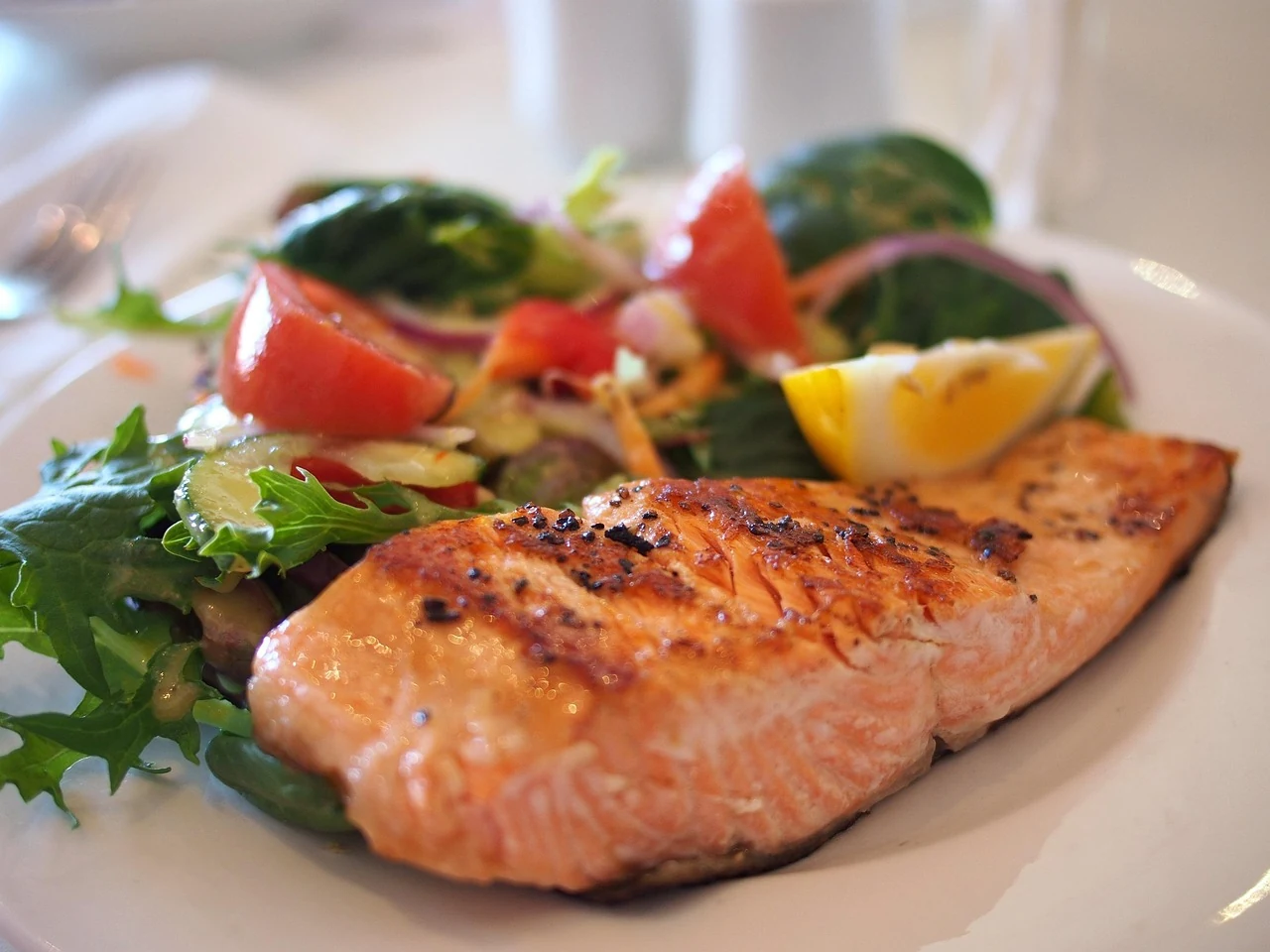
- Protein foods — legumes, fish, eggs, meat. Legumes are rich in fibre and protein. Fish — two portions a week, one of them oily.
- Dairy and alternatives — a source of calcium, protein and some vitamins; preference is given to options with less fat and sugar.
- Oils and spreads — unsaturated, such as olive or sunflower, and in small amounts.
Sweets, pastries, sugary drinks, butter and ice cream stand apart: they are not needed in the diet, so — less often and in smaller amounts.
The plate as a guide, not a calculator
Balance does not have to be in every plate: it can be evened out over a day or even a week.
On the plate it looks like this: slightly more than a third — vegetables and fruits, slightly more than a third — starchy foods, the rest — protein, dairy or oil.
Daily guides for an adult: at least 400 g of vegetables and fruits. At least 25 g of dietary fibre. Fluids — enough so that urine is light yellow.
Salt, sugar and fats: where the limits lie
Free sugars are not only a spoonful in coffee, but also those in honey, syrups and fruit juices. WHO advises less than 10% of daily energy: up to 50 g, roughly 12 level teaspoons, for a person of healthy weight on 2000 kcal. Less than 5% may provide additional benefit. Reducing sugar is advised without non-sugar sweeteners.
Fats — a minimum of 15% of energy per day, for adults up to 30%. Saturated — no more than 10%, trans fats — up to 1%. Industrial trans fats from cookies, pizza and snacks are not needed in a healthy diet. WHO advises replacing saturated fats and trans fats with unsaturated ones: fish, avocado, nuts, olive, soybean, rapeseed oil. Cooking by steaming or boiling helps reduce fat content.
People are consuming more and more highly processed products high in unhealthy fats, free sugars and salt. These are what is advised to eat less often and in small amounts. The restrictions apply to the whole of life, not to a temporary diet.
When a dietitian is needed
These guides suit most people: both a person of healthy weight and one who is overweight, and a vegetarian. If there are special dietary needs or medical conditions, a dietitian helps adapt the proportions to the individual. For children under two, these guides do not apply: they have different needs.
When to see a doctor immediately: suspected stroke or heart attack are emergencies in which you call 103 or 112.
This material is for reference and does not replace a doctor's consultation: it is better to discuss your diet with your family doctor.
Sources
Update history
This content is for reference and does not replace a doctor's consultation. Medical disclaimer