
You have opened your lab report and seen the line "C-reactive protein" or CRP — and you don't yet understand what this line means. Let's go through the mechanism: where this molecule comes from, what it does, what the test shows, and why the same number can sometimes mean completely different things.
What C-reactive protein is
C-reactive protein (CRP, also seen as "C-reactive protein") is a blood plasma protein from the group of acute-phase proteins. Their concentration rises during inflammation, so CRP is used in diagnostics alongside ESR as an indicator of inflammation.
The protein binds the bacterial polysaccharide of pneumococcus. Structurally, it is a small protein of the pentraxin family — a five-membered ring-shaped disc, a monomer with a mass of about 25 kDa. In the body it works as an innate opsonin: it facilitates the capture of microorganisms by phagocytes.
Where CRP comes from and what it does
The liver synthesizes it. The signal comes from cytokines — inflammatory proteins released by leukocytes at the site of inflammation. The liver responds by releasing CRP.
The protein then binds phosphorylcholine — a component of cell membranes and of many bacterial and fungal polysaccharides. In this way it marks damaged and dying cells, helping to clear their remnants.
Imagine the body as a building with smoke alarms. CRP is a smoke detector: it triggers on smoke in any room, but does not report where the fire is or why. The test records the very fact of "smoke," and the doctor will look for the room next.
Why a CRP test is done
It is a general test for inflammation, and it is nonspecific: it will show that inflammation is present, but will not indicate the location or the cause. That is why CRP is often ordered together with ESR — a second marker of inflammation.
Typical tasks: monitoring flares of inflammatory diseases — rheumatoid arthritis, lupus, vasculitis — and understanding whether anti-inflammatory treatment is working. In children with bone and joint infections, CRP is used as a marker of inflammation in osteomyelitis and septic arthritis, although it is not a specific sign of bacteria in the blood.
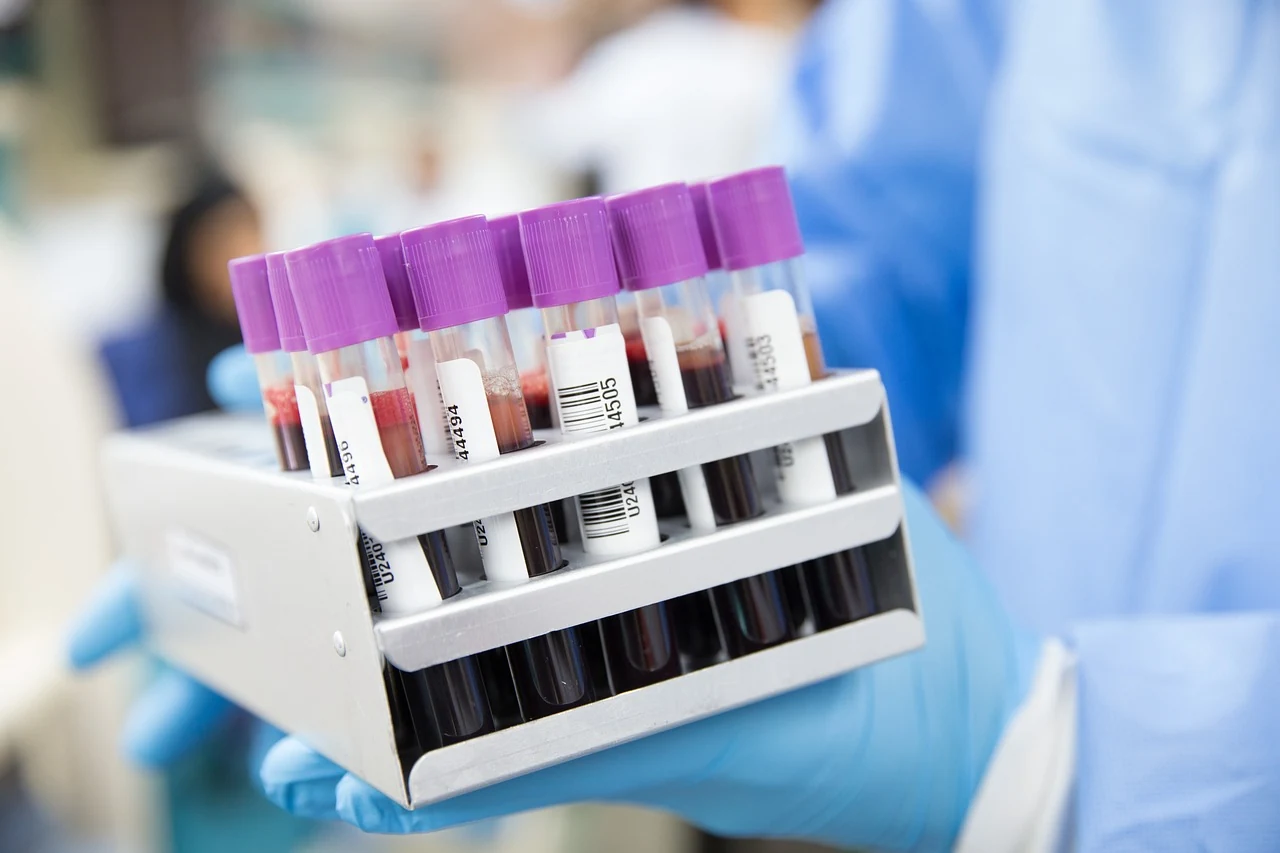
Blood is drawn from a vein — this is called venipuncture. No special preparation is needed.
What the CRP test shows
Reference ranges differ from laboratory to laboratory. In most healthy adults the level is below 0.3 milligrams per deciliter; values rise slightly with age, in women, and in people of African descent.
A low CRP does not guarantee the absence of inflammation: in rheumatoid arthritis and lupus it may not rise, and why this happens is unknown. A rise of 0.3–1 milligram per deciliter is regarded as of unclear significance — here the high-sensitivity variant helps. Levels from 1 to 10 milligrams per deciliter are considered a moderate increase, above 10 milligrams per deciliter — a marked one.
Causes of elevated CRP:
- infections;
- myocardial infarction;
- cancer;
- inflammatory bowel disease;
- rheumatoid arthritis, lupus and related diseases, rheumatic fever.
The cause of a high CRP cannot always be established. A positive result occurs in the second half of pregnancy and with oral contraceptive use.
What types of test exist: standard and high-sensitivity
The standard test answers the question of whether there is noticeable inflammation. The high-sensitivity test (hs-CRP) detects small rises and is used to assess cardiovascular risk: risk is low at a value below 1.0 milligram per liter, average at 1.0–3.0 milligrams per liter, high above 3.0 milligrams per liter. The link between CRP and heart disease is still being studied, so the result is assessed together with other risk factors.
What the result means and when to see a doctor
CRP is not a diagnosis. The doctor reads the number together with symptoms, examination, ESR and other tests, and sometimes looks at the trend: what matters is not a single value but how it changes.
Pain, swelling and stiffness in the joints — especially the hands, feet and wrists — are a reason to see a doctor. In rheumatoid arthritis, early diagnosis matters: treatment started in time reduces the risk of joint damage. Possible complications include carpal tunnel syndrome, inflammation in other organs, such as the lungs, heart and eyes, and an increased risk of heart attack and stroke.
An elevated CRP on its own is not a reason to call an ambulance. 103 or 112 — if, against a background of inflammation or joint pain, life-threatening signs appear: sudden severe pain or pressure in the chest, facial droop, weakness in an arm, speech impairment, difficulty breathing.
This material is for reference: it explains the mechanism but does not replace a doctor's consultation, where your situation will be seen as a whole.
Sources
Update history
Reader reviews
No reviews yet — tell us whether this article was helpful.
Leave a review
This content is for reference and does not replace a doctor's consultation. Medical disclaimer