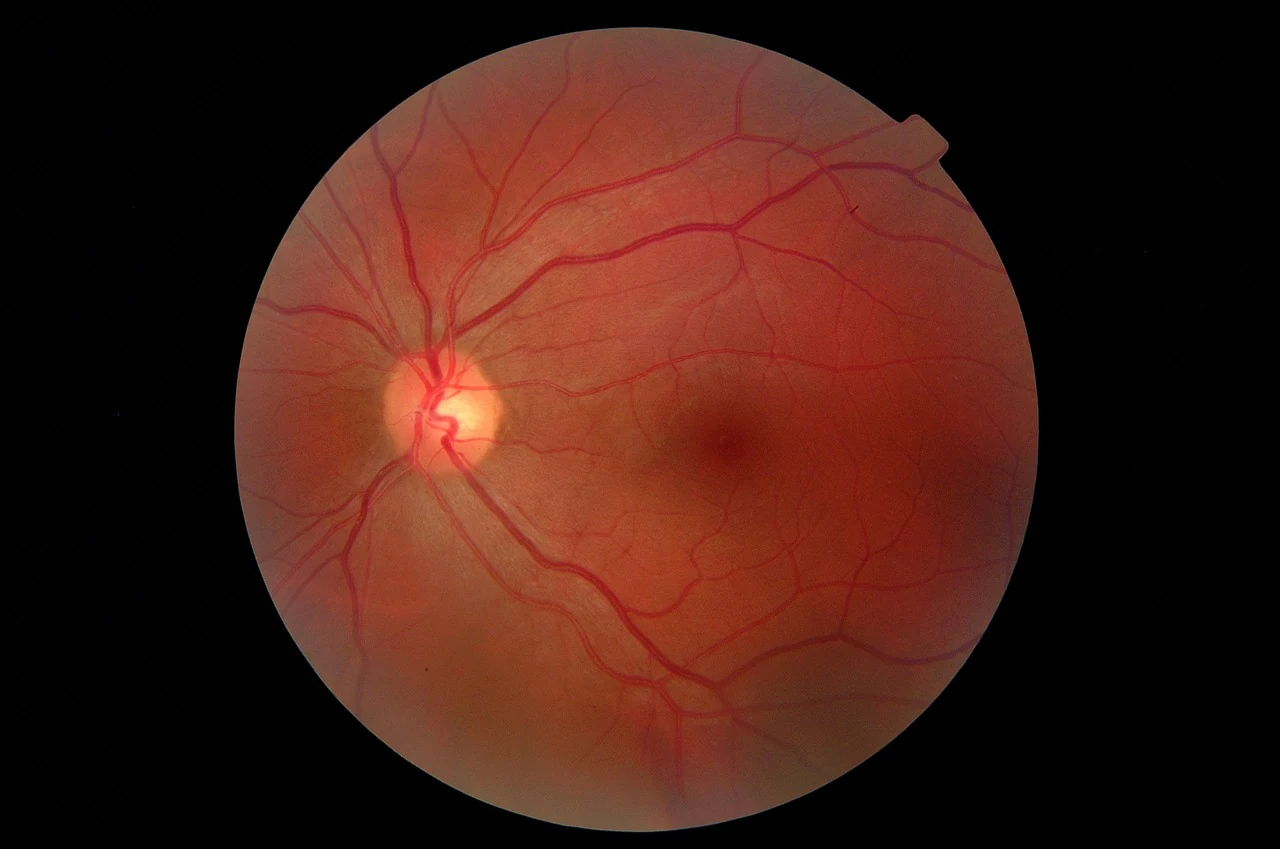

Age-related macular degeneration is damage to the macula, that is, the very center of the retina, a small area that allows reading, recognizing faces, and distinguishing fine details. The disease does not hurt and does not lead to complete blindness, but it gradually takes away central vision. Below is a calm breakdown of what this condition is, how it manifests, and when an ophthalmologist examination is needed.
What age-related macular degeneration and macular degeneration are
Macular degeneration is a general name for a group of diseases in which the retina of the eye is affected and central vision is impaired. It is based on vascular pathology and ischemia, that is, impaired blood supply to the central zone of the retina responsible for vision in the center of the field. Age-related macular degeneration, also known as age-related macular degeneration, is one of the most common causes of blindness in people over 55 years of age.
Maculopathy, macular dystrophy, age-related retinal degeneration are different names for one circle of phenomena. The age-related form is only one of the group of diseases. Such damage does not cause pain, but the cells of the macula die in it.
Dry and wet macular degeneration: how the forms differ
There are two forms. The dry form occurs in approximately 90 percent of patients: the light-sensitive cells of the macula slowly break down, and drusen accumulate under the retina — deposits of unprocessed metabolic products that over time harm the photoreceptors.
The wet form, also called exudative or neovascular, is more dangerous. New vessels begin to grow under the macula, they often leak blood and fluid, and quickly damage the macula. The wet form progresses significantly faster than the dry form and almost always occurs in those who already have the dry form.
Why age-related retinal dystrophy occurs
The exact cause is unknown. The main risk factor is age: at 50 years the probability of developing the disease is about 2 percent, at 66–74 years — approximately 10 percent, after 75 years — up to 30 percent. Smoking, high blood pressure, excess weight, and heredity are also cited: the risk of the late stage is about 50 percent in people with affected relatives versus 12 percent in others.
The role of nutrition is discussed: the risk increases with a deficiency of antioxidants, vitamins C and E, zinc, lutein, and zeaxanthin. At least 13 studies have shown an association between smoking and the disease: in smokers the risk is 2–3 times higher.
How maculopathy manifests: symptoms
The disease does not hurt, and the first changes are easy to miss. The characteristic early manifestations are as follows:
- blurring of vision, when the picture loses clarity;
- difficulty reading and recognizing faces;
- distortion of straight lines, which appear curved;
- gradual loss of central vision in the dry form.
In the dry form, a common early sign is that straight lines appear curved; in the wet form, blurred vision is more common.
How retinal macular degeneration is diagnosed
A regular complete eye examination by an ophthalmologist allows the disease to be detected before vision loss; drops that dilate the pupil may be instilled for examination of the fundus. Among the examinations mentioned is fluorescein angiography — a study of the retinal vessels.
Why macular degeneration is dangerous and when to see a doctor
Without treatment, vision may deteriorate gradually over several years, and then rapidly, over several weeks or months. Treatment can slow vision loss but does not restore it. At the first signs — blurring, distortion of straight lines, difficulty reading — an ophthalmologist is needed.
Age-related macular degeneration by itself is not a reason to call an ambulance; 103/112 — if signs threatening life appear (for example, signs of stroke or heart attack), and if vision worsens, an appointment with an ophthalmologist is needed.
To repeat the main point: the disease takes away central vision but does not cause complete blindness, and treatment can slow vision loss but does not restore it. This material is for reference and does not replace a doctor's consultation.
Sources
Update history
Reader reviews
No reviews yet — tell us whether this article was helpful.
Leave a review
This content is for reference and does not replace a doctor's consultation. Medical disclaimer