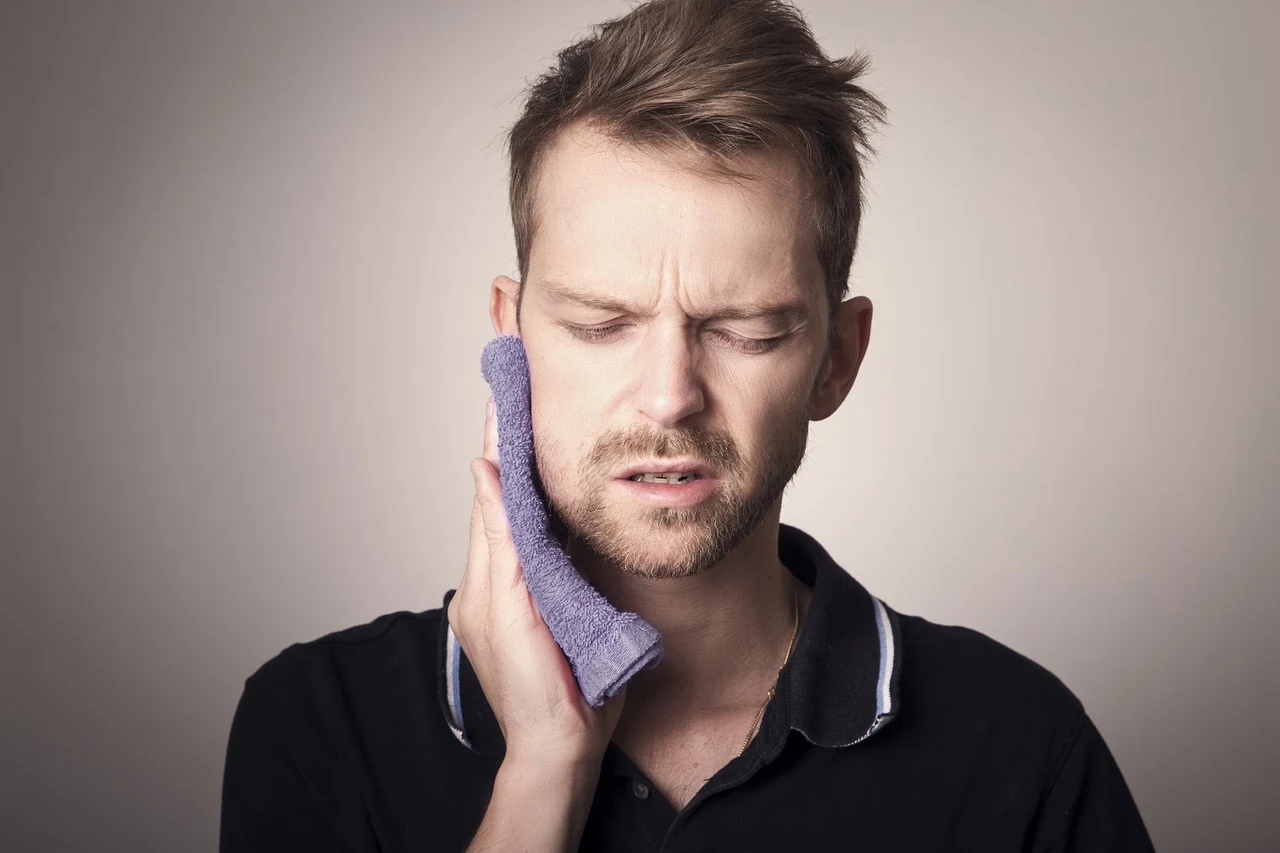

A tooth hurts — and you want to know what it means. There is usually one question: is this already dangerous, or can you wait until you see a dentist. Below — about the causes of pain, what its nature says, and which signs mean you cannot wait.
Why a tooth hurts
Toothache has several causes: caries, a crack or broken tooth, a lost or broken filling, inflammation of the gums. There can also be an infection — often when a tooth, for example a wisdom tooth, has cut through the gums but does not have enough room to come out fully. Pain also occurs from braces, from teeth grinding, and from increased sensitivity.
Through a carious cavity, bacteria penetrate into the pulp — the vascular-nerve bundle inside the tooth. Pulpitis begins: acute or chronic inflammation of the pulp. Nerve endings are injured by the increased volume of tissue and by bacterial toxins. Pulpitis can also occur without caries — when microorganisms enter through the root canal from the bone, from a neighboring tooth, from the maxillary sinus, or as a result of sepsis.
Pulpitis can be acute — serous or purulent, when pus appears in the pulp chamber — or chronic: fibrous, hypertrophic, or gangrenous. Purulent is more painful than serous. Chronic forms are not always painful: fibrous may be asymptomatic, gangrenous causes an unpleasant odor. Inflammation can spread to the tissues around the tooth and to the bone — this is already periodontitis. Calculous pulpitis is distinguished separately: it occurs without bacteria, from mechanical trauma by pulp stones, and runs aseptically.
What the nature of the pain suggests
If pain after a trigger lasts 10–30 minutes, this is focal inflammation of the pulp. When it does not subside for more than 30 minutes or comes at night without any trigger, this is diffuse pulpitis — inflammation has covered the entire pulp. Pain when biting is a separate clue: inflammation has spread beyond the tooth.
With the appearance of pus, the pain becomes throbbing and radiates to various parts of the maxillofacial area.
Sometimes the pain subsides on its own. Inflammation destroys the bridge between the pulp chamber and the floor of the carious cavity, pus finds an outlet into the mouth, pressure drops — and the pain recedes, although destruction continues. This creates a false impression that the disease has passed, so people see a dentist even after the pain disappears — this way acute periodontitis can be prevented.
Abscess: when swelling is added to pain
An abscess is a collection of pus in a tooth or gums caused by infection. It does not go away on its own: it is treated by a dentist. Signs:
- severe pain in the tooth or gums;
- redness in the mouth or externally, on the face or jaw;
- sharp reaction to hot and cold in the affected area;
- unpleasant taste in the mouth, difficulty opening the mouth and chewing;
- swelling of the face or jaw, enlarged lymph nodes in the neck, elevated temperature.
Causes — caries and gum diseases, trauma to the teeth, gums, or mouth, a tooth that has not fully erupted, as well as radiation therapy or chemotherapy.
Tooth sensitivity
Toothache can also be caused by increased tooth sensitivity; distinguishing it from caries or a crack can be done by a dentist.
How a doctor looks for the cause
The dentist determines the cause of the pain and treats that cause. A family doctor does not treat teeth — for toothache you need a dentist. You should make an appointment if the pain lasts longer than two days, does not go away after a painkiller, is accompanied by elevated temperature, pain when biting, redness of the gums, or an unpleasant taste in the mouth. A swollen cheek or jaw is also a reason not to delay.
Call 103 or 112 immediately if the swelling has spread to the area around the eye or to the neck, if due to swelling in the mouth or neck it is difficult to breathe, swallow, or speak, if the mouth is very swollen and difficult to open, and also when the eye is swollen or painful or vision has suddenly worsened.
This text is for reference: it does not make a diagnosis and does not replace a dentist's consultation.
Sources
Update history
This content is for reference and does not replace a doctor's consultation. Medical disclaimer