
Blood on the toothbrush after brushing your teeth is the first thing many people notice in the bathroom. The question comes up right away: what's wrong with the gums? Gum disease is very common: the gums become red, swollen and painful, they bleed, and they must be shown to a dentist.
Why gums bleed
The cause is plaque on the teeth. If it is not removed regularly, it builds up and irritates the gums. In the early form, called gingivitis, bone is not yet lost: there is inflammation and bleeding.
The most common form of gum disease is the one caused by plaque. Plaque collects in the spaces between teeth, in the gum pockets, and wherever something traps it — an overhanging filling edge, the clasp of a removable denture, or tartar.
Gum disease is the main cause of tooth loss in adults worldwide. It is estimated to affect 10–15% of the world's population, and in 2015 there were 538 million people worldwide with it.
Without treatment, gum inflammation can progress to periodontitis: then the tissues and bone around the tooth are destroyed, and teeth become loose and fall out. Gum inflammation and bone destruction are mostly painless.
Treatment depends on the severity of the gum disease; a serious form requires examination by a specialist.
Periodontitis is different. It is inflammation of the periodontium: disruption of the integrity of the ligaments that hold the tooth in the alveolus, and bone resorption. Infectious periodontitis is mainly a complication of untreated tooth decay. Gum disease does not always progress to periodontitis, but periodontitis always begins with it.
What you may notice
- gums bleed when you brush your teeth, use floss, or eat something hard — for example, an apple;
- gums become swollen, red and painful;
- bad breath and an unpleasant taste appear;
- gums recede, exposing the teeth;
- teeth begin to loosen or fall out.
One possible consequence is a dental abscess, a pocket of pus near the tooth. The appearance of the gums also changes: they become shiny, and the granular texture they usually have disappears.
What happens at the appointment
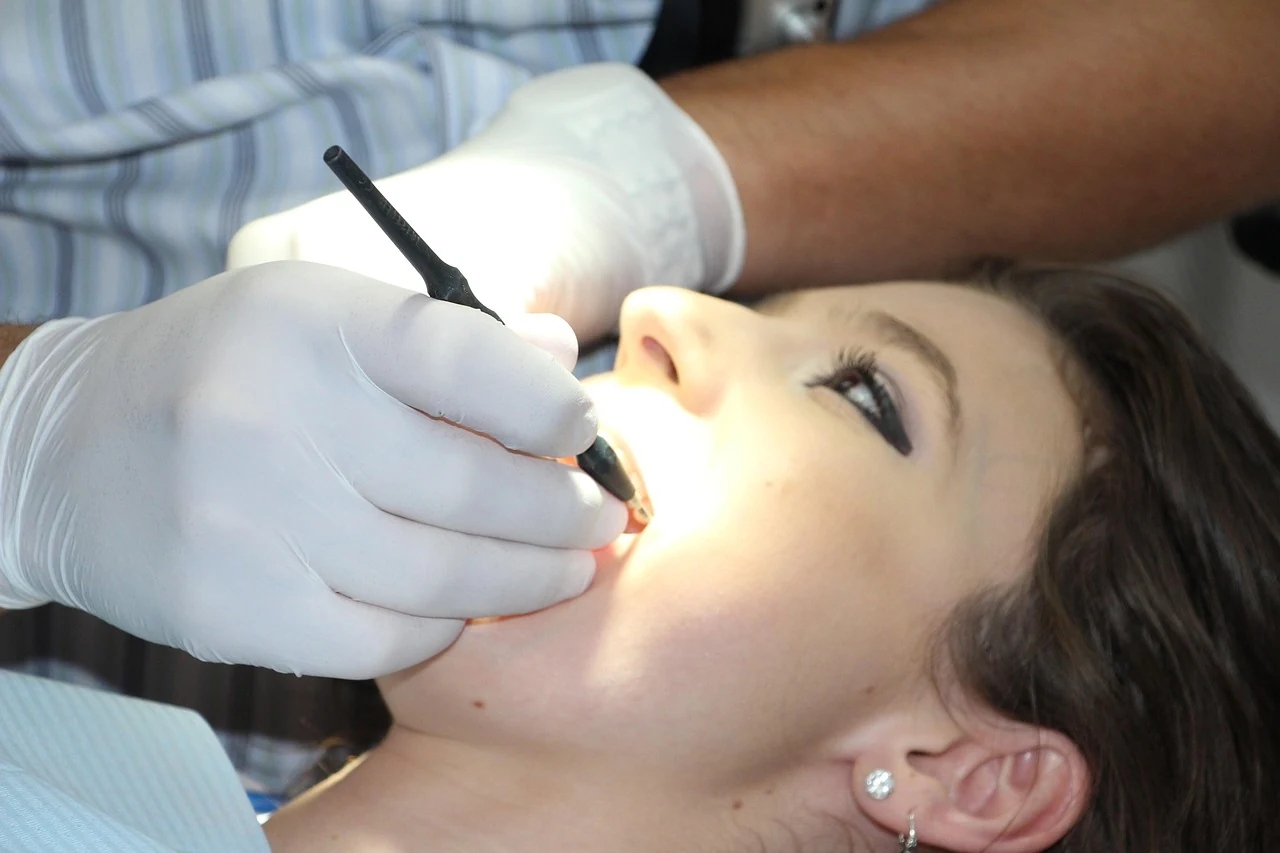
The dentist checks the teeth and gums. A gum examination may also be performed by a hygienist, but the diagnosis is made by the dentist. If there is doubt about the severity, they may refer you to a specialist in gum disease — a doctor who deals with the gums and the bone around the teeth. To see bone loss around a tooth, an X-ray is taken.
Regular check-ups are needed even when there are no complaints. If you have not had a check-up for two years, that is a reason to book one; for a child under 18, this period is one year.
Who is at risk
The main factor is plaque that stays on the teeth for a long time. People with type 2 diabetes and pregnant women need regular check-ups with a dentist and hygienist.
Gum disease also occurs in children. Painful, bleeding gums in a child are a reason to show them to a dentist.
When to see a dentist
You should see a dentist if your gums bleed when brushing or eating something hard, if they are painful and swollen, or if you have bad breath. You should request an urgent appointment if your gums are very painful and swollen, if teeth are loose or falling out, if ulcers or red spots have appeared in the mouth, or if there is a growth in the mouth or on the lip. These signs apply to both adults and children.
An urgent appointment is a visit to the dentist outside the usual queue.
Gum disease by itself is not a reason to call an ambulance; 103/112 — if the condition is life-threatening.
This material is for reference and does not replace a doctor's consultation.
Sources
Update history
This content is for reference and does not replace a doctor's consultation. Medical disclaimer