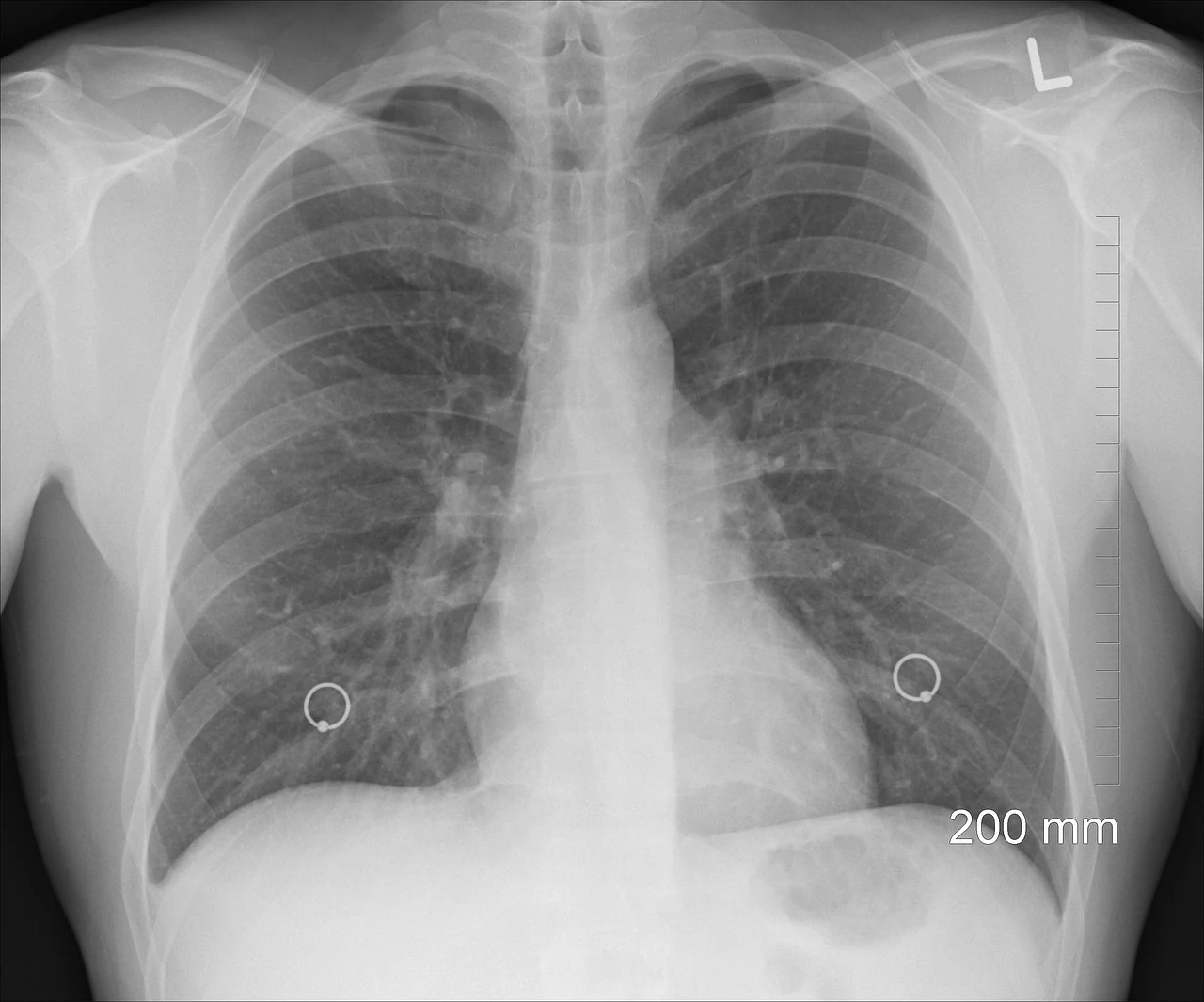

Lung cancer remains the leading cause of cancer mortality worldwide: in 2022, about 2.5 million new cases and 1.8 million deaths were recorded. Below is what is known about the causes, symptoms, and limits of screening.
What kind of disease this is
Lung cancer occurs when lung cells grow without control. About 85% of cases are non-small cell lung cancer; small cell lung cancer is less common but usually more aggressive. The tumor can metastasize to the brain, bones, liver, and adrenal glands.
Smoking and risk: what the numbers show
Smoking causes 80–90% of lung carcinomas, while people who have never smoked account for 10–15% of cases. Tobacco smoking is linked to 60–70% of cases that could have been avoided. Cigarette smoke contains more than 60 known carcinogens, including nitrosamines and benzopyrene; nicotine additionally suppresses the immune response to tumor cells in damaged tissue.
Passive smoking, that is, inhaling smoke from nearby smokers, also causes lung cancer in non-smokers: according to studies in the USA, Europe, and Australia, the risk for a person living with a smoker is 20–30% higher, and for someone who works with smokers, 16–19% higher.
Other factors besides smoking
Smoking dominates, but it does not exhaust the causes. Risk factors include:
- secondhand tobacco smoke;
- air pollution — outdoor and indoor;
- occupational exposures: asbestos, silica, diesel exhaust;
- radon;
- certain chronic lung diseases and genetic predisposition.
Radon is a colorless, odorless gas, a decay product of radium; in the USA it is the second most common cause of lung cancer after smoking, and the risk increases by 8–16% for every 100 Bq/m³ of concentration. Asbestos combined with smoking has a synergistic effect. Outdoor air pollution has a small effect on risk: an increase in nitrogen oxide concentration of 10 parts per billion raises the risk by 14%.
Symptoms that are often attributed to something else
Typical symptoms: a cough that does not go away, coughing up blood, shortness of breath, chest pain, fatigue, weight loss without a known cause, repeated lung infections. There can also be extrapulmonary manifestations — muscle weakness, changes in calcium metabolism, drooping of the eyelid with a tumor of the lung apex. A cough that does not go away is among the typical symptoms of lung cancer, so its cause should be determined by a doctor.
Sudden worsening of shortness of breath, severe chest pain — call 103 or 112.
Early symptoms may be mild or perceived as ordinary respiratory problems, and this delays diagnosis. Often by the time the complaints for which a person seeks care appear, the tumor has already spread beyond its site of origin. About 10% of people have no symptoms at the time of diagnosis — the neoplasm is found during a routine chest X-ray.
Screening: who is considered for it
In systems with sufficient resources, screening can be considered for defined high-risk groups — primarily current and former heavy smokers. With proper quality control and follow-up, it reduces mortality from lung cancer. Diagnosis relies on examination, imaging (X-ray, computed tomography, MRI), bronchoscopy, histological examination of a tissue sample, and molecular testing. For screening of high-risk groups, imaging, including computed tomography, is considered; the specific scope of examination is determined by the doctor.
Who to contact
With a prolonged cough, coughing up blood, or unexplained weight loss, a doctor's consultation is needed: the cause is determined through examination, imaging, and, if needed, a biopsy. The choice of treatment is determined by the doctor depending on the tumor type, stage, and the person's condition. This material is for reference and does not replace consultation with a doctor who sees your specific situation.
Sources
Update history
This content is for reference and does not replace a doctor's consultation. Medical disclaimer