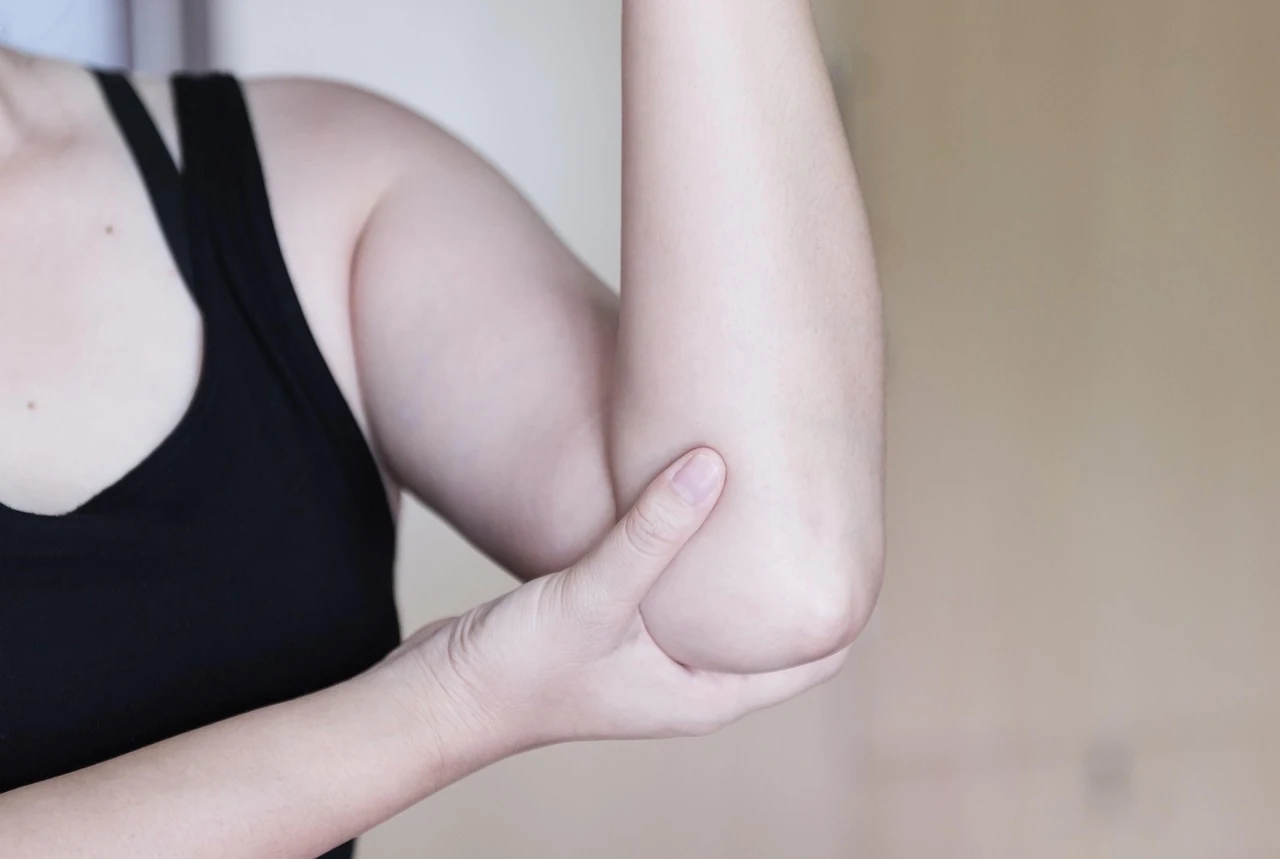

Psoriasis is a chronic skin disease: dry scaly plaques, itching, sometimes pain. Below is what is proven about it and what is merely promised on the shelves.
What it is and where it comes from
In psoriasis, the skin produces more cells than usual and does so faster: what normally takes about a month happens in a matter of days. The cause is a malfunction of the immune system, which reacts to its own skin cells. Why this happens is not fully understood, but heredity matters: if psoriasis runs in the family, the risk is higher. The disease affects 2–3% of the world's population, men and women equally often.
Psoriasis is not contagious: you cannot catch it or pass it to others. "Scaly lichen" is an outdated name for the disease.
What the plaques look like and where they appear
The main sign is dry, itchy, painful areas covered with silvery-white scales. Plaques are usually 1–2 cm, oval or irregular in shape. On light skin they are pink or red, later silvery-white, sometimes taking on a waxy yellow or orange-brown hue; on dark skin they are gray, and after they disappear they leave dark marks.
Typical sites are the head and the area behind the ears, the chest, abdomen and back, buttocks, forearms and elbows, lower legs and knees. They can occur in folds: in the groin, on the genitals, under the breasts. Nails are also affected — the surface becomes pitted and dented, sometimes changes color and thickness.
Some people have a few plaques, others have large areas of the body. Symptoms can start at any age, most often at 15–25 or 50–60 years. The course is wavy: flare-ups alternate with calm periods.
Forms of psoriasis
There are five main types, one of which accounts for the vast majority of cases.
- Plaque, or ordinary, psoriasis — red patches with white scales on top; about 90% of cases.
- Inverse — smooth red patches in skin folds without heavy scaling.
- Pustular — small non-infectious blisters filled with pus.
- Erythrodermic — the rash becomes very widespread and covers large areas of skin.
Generalized pustular psoriasis is distinguished separately: within a few hours severe redness develops, inflammation covers large areas of skin and is life-threatening.
What triggers flare-ups
Triggers look ordinary: stress, alcohol and smoking, excess weight, pregnancy, some medications, infections (including group A streptococcus and HIV), scratches and cuts, sunlight. Damaged skin produces a new plaque exactly at the site of injury — this is the Koebner phenomenon. In winter, manifestations often worsen.
Link to joints
In some people with psoriasis, psoriatic arthritis — inflammatory joint damage — develops over time. It is estimated that up to 30% of people with psoriasis have it. Manifestations are recurring pain, stiffness and swelling in the joints. This is no longer just about the skin, and that is why such a symptom is not delayed.
How the diagnosis is made and when to see a doctor
The diagnosis is usually based on the characteristic skin picture. Psoriasis can resemble atopic eczema and other skin diseases, so the doctor may take a small skin sample and examine it under a microscope. Then the type, severity and location are assessed: some cases are managed by a family doctor, more complex ones are referred to a dermatologist.
See a doctor routinely if you have symptoms of psoriasis; if treatment does not work or causes side effects; if pain, stiffness and swelling in the joints that recur are added to the skin lesions.
Psoriasis by itself is not a reason to call an ambulance. Call 103 or 112 if the skin rapidly reddens and white pus-filled bumps appear that merge with each other; if plaques on the feet turn yellow and fill with pus; if red scaly pus-filled bumps appear on the fingertips and toes — especially together with a rapid heartbeat, high temperature, or a feeling of heat, cold or shivering.
This text is for information only and does not replace consultation with a doctor who sees your skin.
Sources
Update history
This content is for reference and does not replace a doctor's consultation. Medical disclaimer