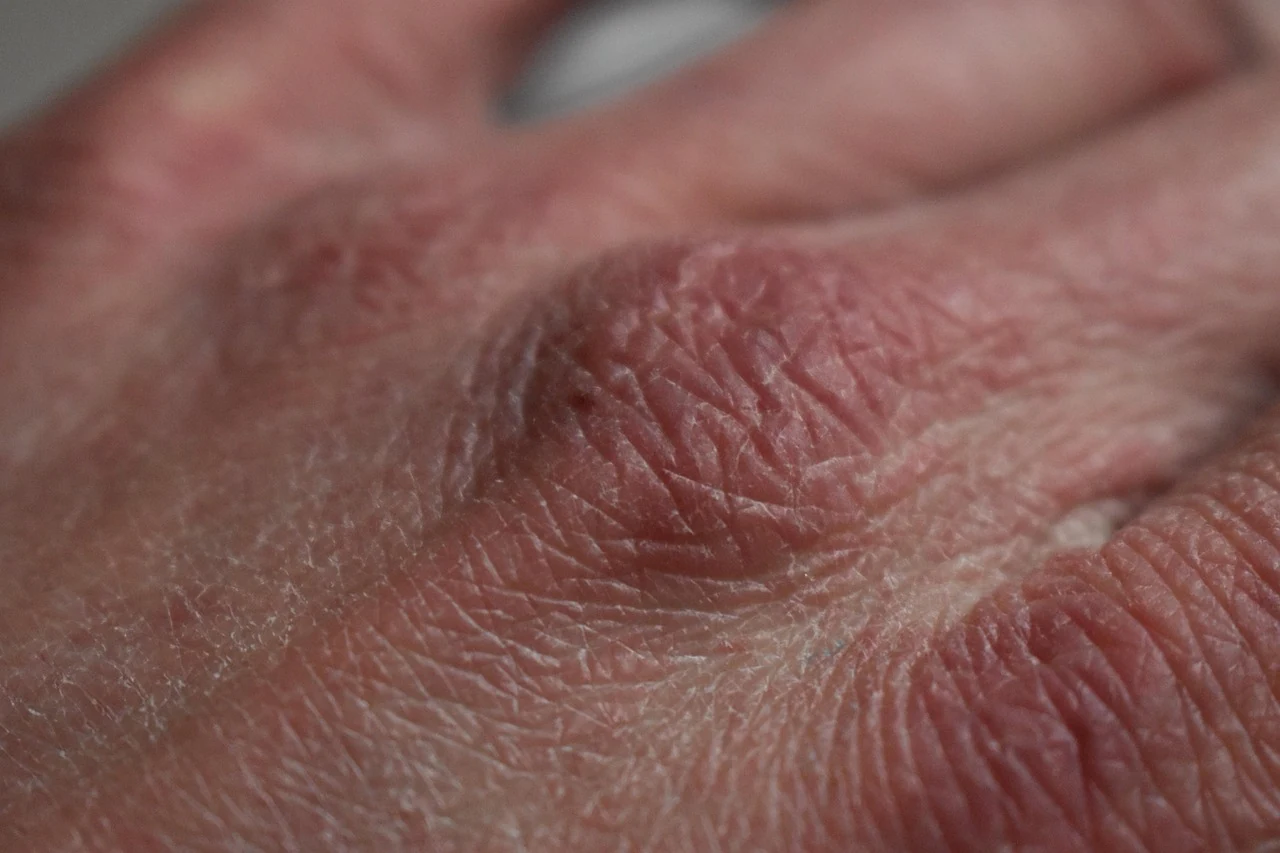

Atopic eczema, or atopic dermatitis, is a common skin condition in which itching is not a side effect but the main symptom. We explain what "atopy" means, why the rash appears on certain areas, and which factors trigger flare-ups. Separately, we cover when to see a doctor routinely and when urgently.
What atopic dermatitis is and what "atopy" means
Atopic dermatitis is a skin condition with a chronic relapsing course, characterized by skin itching and caused by hypersensitivity to both allergens and nonspecific irritants. The skin becomes dry, cracks, flakes, thickens, sometimes develops blisters, bleeds, or becomes covered with crusts.
The word "atopy" is translated as "out of place" or "strange." In the early 1920s it was used to describe an unusual type of hypersensitivity to various environmental substances that was more common in families without obvious prior sensitization. It was proposed by the philologist M. Perry of Columbia University, to whom American allergists turned.
Who gets it and how the course changes
Atopic eczema occurs in people of any age, but most often in young children; symptoms usually start in infants and preschoolers, although they can begin at any age. The course is wavy: periods of flare-ups alternate with calm intervals.
The rash is more often on the elbows, knees, and hands. The color of the affected areas varies depending on skin tone: from redness to whitish, gray, or purple patches. Besides atopic, there are other types of eczema — contact, discoid, pompholyx, and varicose. Atopic dermatitis is not contagious — you cannot catch it or pass it on to someone else.
Triggers: what sets off a flare-up
The causes are not fully understood, and atopic eczema currently cannot be cured, although symptoms usually ease with age. Heredity is clearly visible: the risk is higher if one or both parents have atopic eczema.
- Contact with an allergen or irritant — soap, laundry detergent, animals, certain fabrics, pollen, household mites, certain foods.
- Heat and sudden temperature changes.
- Skin infections, in particular staphylococcal.
- Stress.
- Hormonal changes, for example during pregnancy.
Atopy is not only about the skin
Atopic dermatitis is one of the atopic diseases, which also include allergic rhinitis, bronchial asthma, allergic conjunctivitis, and some allergic lesions of the gastrointestinal tract; the risk is also higher when a person or a close relative has asthma or hay fever. The course has age-related features in the location and appearance of inflammation foci.
When infection sets in
The area of skin affected by atopic dermatitis is often colonized by Staphylococcus aureus, which further irritates it. In infants and toddlers the rash often appears on the face as well. Signs that require urgent attention: areas have become covered with blisters, crusts, are oozing fluid, or pustules have appeared on them; the skin is painful, swollen, hot to the touch; the rash has suddenly increased; a fever has risen or the person feels unwell. These may be signs of infection or a more serious condition — eczema herpeticum.
Atopic dermatitis by itself is not a reason to call an ambulance; 103/112 — if along with skin manifestations there is difficulty breathing, facial swelling, or confusion.
When to see a doctor
People go routinely to a family doctor if there are symptoms of atopic eczema or if the proposed treatment is not helping. The doctor can prescribe treatment and, if needed, refer to a dermatologist. Living with atopic eczema can be difficult. If the condition affects mental health, referral to a mental health specialist is possible. Reference text does not replace a doctor's consultation.
Sources
Update history
This content is for reference and does not replace a doctor's consultation. Medical disclaimer