
Planned surgery is scheduled in advance, after full preoperative preparation. You have time to undergo examinations, ask questions, and understand what will happen. Here is the order: before surgery, on the day of surgery, after.
Types of Surgery
Surgery can be emergency, urgent (within the first hours after admission to the hospital), or planned. Planned surgeries are performed at a time convenient for medical and organizational reasons, but unjustified delay reduces the effectiveness of the intervention. Every surgery has indications and contraindications—absolute and relative. The surgery itself consists of access, the actual manipulation, and closure, i.e., restoration of the body's integrity.
Preoperative Examination
A few weeks before the intervention, you are usually invited to a separate appointment—a preoperative assessment. The goal is to make sure you are ready for the procedure and for anesthesia.
The scope of tests is determined by the doctor. These may include blood tests, X-rays, an electrocardiogram to check the heart, and a physical endurance test.
At this stage, you can also meet the anesthesiologist who will administer anesthesia. The doctor asks about your medications, chronic diseases, and allergies to anesthesia or other drugs. At this appointment, the doctor also asks about your concerns, such as fear of needles.
Preparation a Few Days Before
Before anesthesia, doctors usually clarify when you can eat and drink and whether to continue your usual medications. They may give you an antiseptic shower gel for a few days.
General Anesthesia
General anesthesia means you are asleep and feel nothing. During the procedure, you are unconscious, feel no pain, are unaware of what is happening, do not move, and your muscles are relaxed—this makes it safer for doctors to work. It is used when local anesthesia, regional anesthesia (you are conscious but the area is numbed), or sedation (you are relaxed but conscious) are not suitable.
It is administered in the hospital. Most often—by injection through a thin tube (cannula) into a vein in the arm; sometimes—by gas through a mask if finding a vein is difficult. It acts quickly: you fall asleep in about a minute.
Before anesthesia, you may be given medications that help you relax, reduce stomach acidity, nausea, or pain. The anesthesia team is led by a consultant anesthesiologist: they monitor the anesthesia and adjust it.
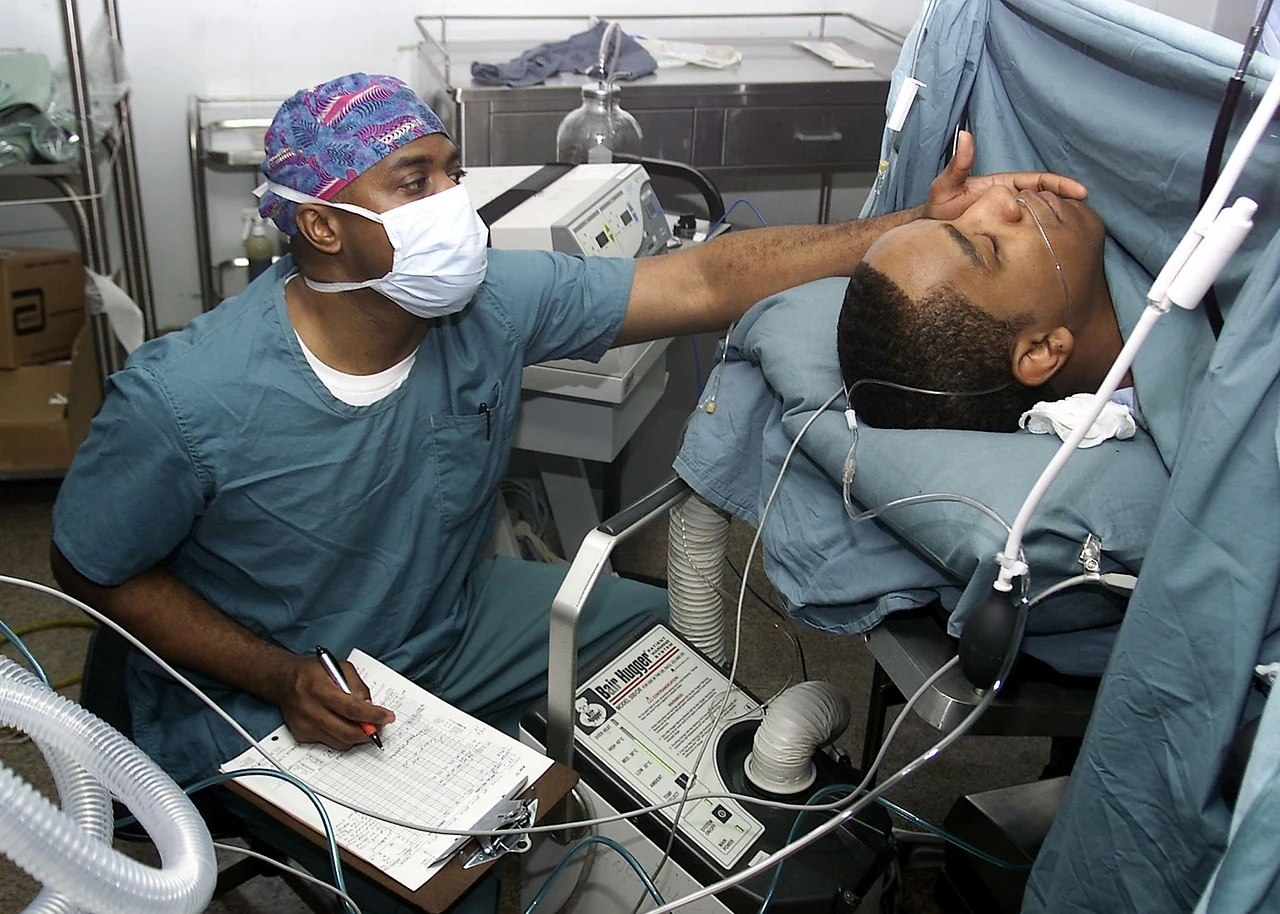
An anesthesiologist is by your side at all times. They monitor your pulse, blood pressure, and oxygen levels, administer fluids through an IV, and while you sleep, insert a tube into your throat to help you breathe. The duration of sleep ranges from a few minutes to several hours, depending on the procedure.
You wake up either in the operating room or in the recovery room. At first, you will be drowsy. The oxygen mask will be removed when you are fully awake.
The First 24 Hours After
The effects of anesthesia last about a day. In the first hours, you will be drowsy. Staff will give you pain and nausea medication if needed. After waking up, you are usually allowed to eat and drink when you feel ready. You are often discharged home within a few hours—but someone else must pick you up, by car or taxi.
Side effects usually resolve within minutes or hours:
- thirst and drowsiness;
- hoarse voice or sore throat from the tube;
- shivering;
- nausea and vomiting;
- pain or bruising from the injection or from lying still, confusion or memory gaps.
Warning Signs at Home
Complications are rare, and the doctor tells you about them in advance. These include a serious allergic reaction, difficulty breathing, chest infection, damage to teeth or mouth from the breathing tube, eyes or nerves, as well as prolonged confusion, more common in older people.
If a side effect bothers you or does not go away, call the hospital where you had surgery or make an appointment with your family doctor.
Call 103 or 112 immediately if a serious allergic reaction or difficulty breathing occurs after surgery or anesthesia. These are emergencies.
This material is for reference and does not replace a doctor's consultation.
Sources
Update history
This content is for reference and does not replace a doctor's consultation. Medical disclaimer