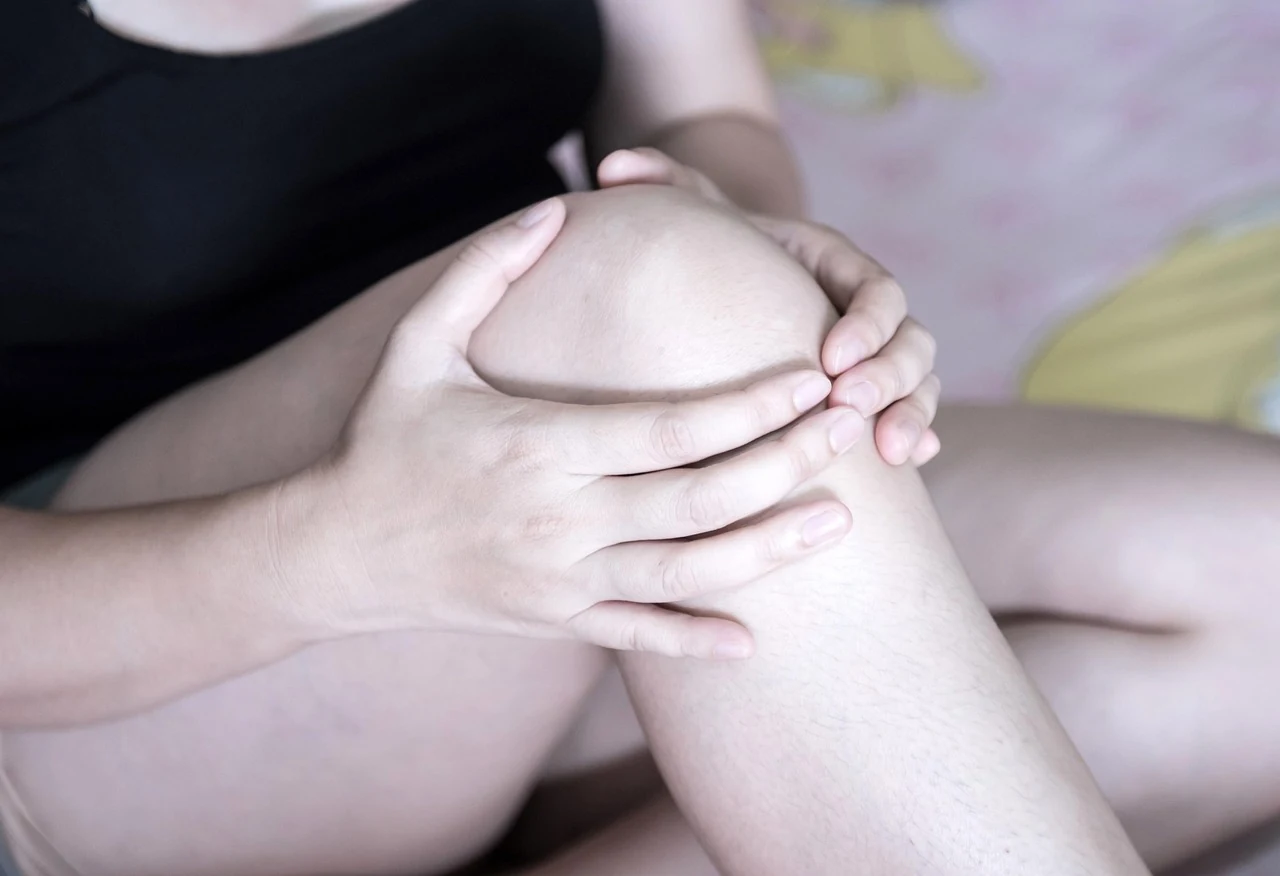

Osteoarthritis is a condition in which joints become painful and stiff: the cartilage at the ends of bones breaks down, and the joint moves worse. Below — what happens inside the joint, which joints are affected, and what affects the course.
What is osteoarthritis
Joints experience a constant low level of damage every day, and usually the body repairs them itself. In osteoarthritis, the protective cartilage at the ends of bones breaks down: pain, swelling, and movement problems occur, bone outgrowths may appear, the area becomes swollen and red (redness is harder to see on dark skin).
Osteoarthrosis is a dystrophic disease of joints due to irreversible degeneration of cartilage: chondrocytes are damaged, cartilage loses elasticity, microcracks appear through which enzymes from synovial fluid penetrate. Then the subchondral bone changes, and marginal osteophytes appear.
Which joints are affected
Almost any joint can be affected, but problems most often occur in the knees, hips, and small joints of the hands. The metatarsophalangeal joint of the big toes and the interphalangeal joints of the hands are also affected.
Symptoms of osteoarthritis
The main symptoms are pain and stiffness, as well as movement problems in the joint. There may be swelling, tenderness, creaking or crunching during movement. Severity varies greatly: in some, symptoms are mild and come and go, in others they are constant and severe, leading to difficulties with daily activities.
Pain is chronic, occurs during movement, loading, and even weather changes; stiffness — after rest. Joint deformity, a feeling of instability, blocking — limited mobility — are possible.
In stage I, fatigue of the limb is felt, moderate limitation of movements, slight crunching may occur; there is no pain at rest, but at the start of walking, 'starting pain' occurs. On X-ray — narrowing of the joint space. In stage II, limitation of movements increases, accompanied by crunching, joint deformity appears, muscle mass decreases, lameness occurs; on X-ray the space is 2–3 times narrower, pronounced subchondral sclerosis, osteophytes. In stage III — almost complete loss of mobility, pain persists at rest, joint space is almost absent.
What increases the risk
- age — risk increases with years;
- excess weight — additional load on knees and hip joints;
- joint injury — loading when the joint has not had time to recover after injury or surgery;
- other joint diseases — secondary arthritis in already damaged joints, for example after rheumatoid arthritis or gout;
- sex and heredity — more common in women, family history also matters.
How it is diagnosed
The family doctor asks about symptoms and examines the joints. Osteoarthritis can be suspected if the person is 45 years or older, pain increases with joint use, and morning stiffness is absent or lasts less than 30 minutes. Prolonged morning stiffness may indicate rheumatoid arthritis.
X-ray and blood tests are usually not needed, but they may be prescribed to rule out other causes — rheumatoid arthritis or bone fracture.
What affects the course
Osteoarthritis is a long-term condition that cannot be cured, but it does not necessarily worsen over time and sometimes gradually improves. If symptoms are more pronounced, the doctor discusses the category of painkillers and an exercise plan with a physiotherapist, in a small proportion of cases — surgery.
It is impossible to completely prevent osteoarthritis.
Call 103 or 112 for severe joint or bone injury, as well as for emergencies — stroke, heart attack, serious road accident.
Routinely, one sees a family doctor if symptoms persist — to confirm the diagnosis. Questions for the appointment: which joints will you examine; is an X-ray needed and what should it rule out; under what changes should I come earlier. The material is for reference and does not replace a doctor's consultation.
Sources
Update history
This content is for reference and does not replace a doctor's consultation. Medical disclaimer