
At first glance, a sprain and a fracture look the same: pain, swelling, bruising, an inability to move the limb normally. The difference lies in what exactly has broken — an elastic ligament or a bone. This determines whether an X-ray is needed and why a single sign cannot tell them apart.
What Exactly Gets Damaged
A ligament is a bundle of collagen fibers that connects two bones and passively stabilizes a joint. It stretches poorly: its elastic reserve is about 4 percent of its length. When a joint is suddenly forced beyond its usual range of motion, the reserve is exhausted and the fibers tear — this is a ligament sprain. The same kind of overload to a muscle or tendon is called a muscle strain.
Causes include a sudden twisting movement, repetitive loads, muscles without a warm-up, fatigue, and contact sports. Ligaments are most often affected in the ankle, wrist, thumb, and knee; muscles — in the foot, lower leg, and back.
Severity is assessed by how much the ligament is damaged and whether the joint has become unstable: from damage at the microscopic level with mild tenderness to a complete tear with significant swelling and instability.
Signs of a Sprain
The set of symptoms is typical; the difference is in their severity:
- Pain, tenderness when pressing, and a feeling of weakness around the joint.
- Swelling and bruising: blood vessels in the damaged ligament are torn, and blood seeps into the tissues.
- Inability to bear weight on the limb or use it as usual, restricted movement.
- Joint instability: the damaged ligament no longer holds the joint properly.
- Involuntary muscle spasm, when the muscle contracts painfully on its own.
Mild and moderate sprains heal in about 6 weeks; severe ones can take months.
Signs of a Fracture
Bone tissue has no pain receptors. The pain comes from the periosteum, which does have them and which tears along with the bone; it hurts from swelling and hematoma in the surrounding soft tissues; it hurts from involuntary muscle spasms trying to hold the fragments in place. That is why the pain is often sharper and longer-lasting than with a sprain.
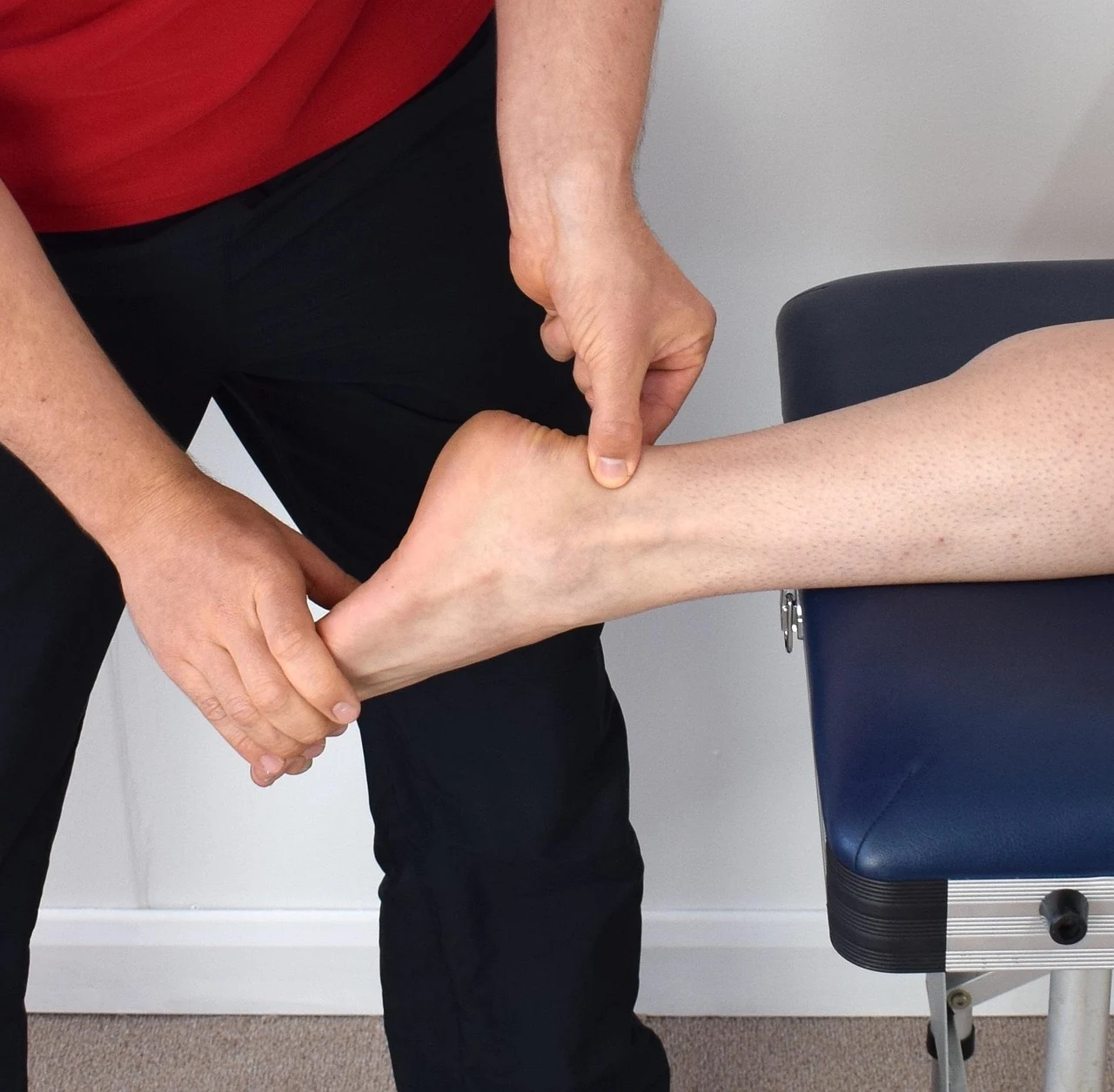
The distinguishing sign is bone tenderness: pain when pressing directly on the bone, especially under load, when the person puts weight on the leg. An inability to bear weight on the limb is also described with sprains, so it alone cannot distinguish a fracture from a sprain. A fracture can also occur from minimal trauma if the bone is weakened — the most common cause of such fragility is osteoporosis.
Seek a doctor immediately — call 103 or 112 if at the moment of injury you heard a crunch, the injured part changed shape or is at an unnatural angle, numbness or tingling appeared, and the skin around it turned blue, gray, or became cold to the touch. These signs suggest a fracture, and the person needs an X-ray.
When an X-ray Is Needed
An X-ray shows bone structures and is needed primarily to rule out or confirm a fracture. The reason is tenderness or pain in the bone exactly at the site of injury. A significant sprain can look like a ligament tear or a fracture, and even a healthcare professional sometimes finds it hard to tell them apart without an image. Ligaments and tendons are not visible on an X-ray: MRI or ultrasound is used for them. The doctor determines the referral for examination after the assessment.
The First Hours: What the Doctor Assesses
First — the mechanism of injury: exactly how the leg twisted, whether there was a crunch, whether the person was able to stand on the limb. Then the examination: location of pain on pressing, swelling and bruising, joint stability, sensation and blood circulation below the site of injury. If the X-ray is insufficient, a CT scan or MRI may be ordered.
Complications of a fracture include tissue compression within the muscle compartment, healing of fragments in the wrong position, and non-union.
When to See a Doctor
See a doctor urgently if the injury is very painful or the pain is worsening, the swelling or bruising is large or increasing, you cannot bear weight on the limb or walk more than a few steps, the area is very stiff and moves poorly, or a high fever, chills, or a feeling of heat or cold has appeared — this may be a sign of infection.
See your family doctor routinely if the pain and swelling do not decrease or the condition worsens. The doctor will decide whether examinations are needed or observation is sufficient.
This material is for reference: it does not replace a doctor's consultation and does not determine what exactly has broken in your case.
Sources
Update history
This content is for reference and does not replace a doctor's consultation. Medical disclaimer