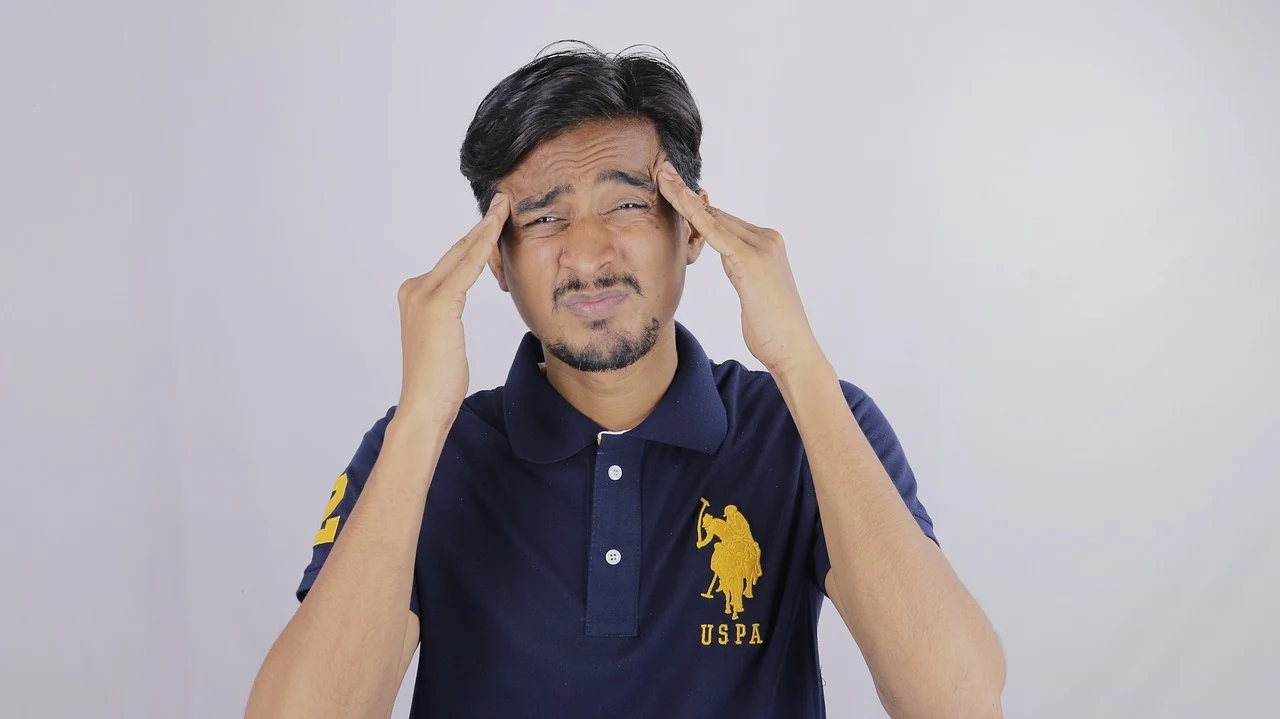

Forehead pain is a headache. Its causes are divided into primary and secondary, and when evaluating the complaint, the doctor assesses the nature of the pain, its duration, and accompanying symptoms.
Why does the head hurt in the frontal region
The brain itself does not feel pain: it has no pain receptors. The sensation is formed by nociceptors in the skin and muscles of the head and neck, in the meninges, in the cranial and spinal nerves, in the extracranial arteries and veins. Therefore, the source of forehead pain often lies not deep in the skull but in the tissues that cover and supply this area.
Headaches are divided into primary, where there is no organic cause and the formation of the pain sensation itself is disrupted, and secondary — a symptom of another disease. Primary forms account for 95–98% of all cases, and at least once a year headache occurs in 90% of people.
Tension-type headache and forehead pain
The most common type is associated with tension in the muscles of the shoulders, neck, scalp, and jaw, as well as with stress, depression, and anxiety. Attacks more often occur in those who work a lot, sleep little, skip meals, or consume alcohol; episodic tension-type headache is the most common cephalalgia overall.
Headaches can last from 30 minutes to several hours, sometimes several days. Most such pains resolve on their own and do not indicate a serious disease.
Frontal pain in diseases of the nose and paranasal sinuses
Sinus headache is one of the common types; a cold or flu is among the frequent causes of headache.
A separate difficulty is diagnostic confusion: cluster headache is often mistaken for sinus headache. A doctor helps determine what exactly causes the pain.
Migraine and other causes of pain in the forehead area
Migraine affects 12 to 18% of the world's population, with women three times more often than men. Cluster cephalalgia occurs in less than 0.5% of people, and men among such patients are 5–8 times more numerous.
Some frontal pains are secondary. Overuse of painkillers paradoxically intensifies pain, this is called medication-overuse headache; neck pathology gives cervicogenic pain. Everyday triggers are listed below.
- cold or flu;
- stress and overwork;
- alcohol and excess painkillers;
- poor posture and vision problems;
- irregular meals and lack of fluids.
Attempts to sort this chaos have been made for a long time: the first classification "De Cephalalgia" was compiled by Thomas Willis in 1672, and in 1787 Christian Baur divided pains into idiopathic and symptomatic and described 84 categories.
Pain in the left or right frontal region: what does it mean
The side itself does not indicate a diagnosis. Unilateralness has historically been associated with migraine: "half-head disease" with vomiting was described as early as the Ebers papyrus, and the term "hemicrania" was introduced by Galen. For a doctor, the sensation on the left or right is just one sign among many, and it is assessed together with the nature, duration, and accompanying symptoms.
Warning signs and when to see a doctor
A planned visit is warranted when you cannot manage the pain on your own, it intensifies, or attacks recur regularly.
More urgent evaluation is needed if the pain is accompanied by visual or eye problems, appears or worsens with coughing, sneezing, bending over, and physical exertion, is combined with vomiting, and in a child worsens or wakes them at night; a separate reason is jaw pain when eating and scalp tenderness.
Diagnosis begins with history-taking: nature, duration, provoking factors. A headache diary can be helpful. Warning symptoms, "red flags," become the basis for additional investigations. The relevant specialty is a cephalalgist, a neurologist who specializes in headache.
Forehead pain by itself is not a reason to call an ambulance. Numbers 103 and 112 are needed if the pain arose suddenly and is extremely severe; if there were seizures, numbness or weakness in the body and face; if speech, walking, balance, or memory are impaired; if there is drowsiness and confusion, loss of vision, rash that does not blanch on pressure, very high temperature, neck stiffness, or intolerance to bright light; and also if the pain appeared after a head injury within the last three months.
This material is for reference: it describes possible causes and does not replace a doctor's consultation.
Sources
Update history
Reader reviews
No reviews yet — tell us whether this article was helpful.
Leave a review
This content is for reference and does not replace a doctor's consultation. Medical disclaimer