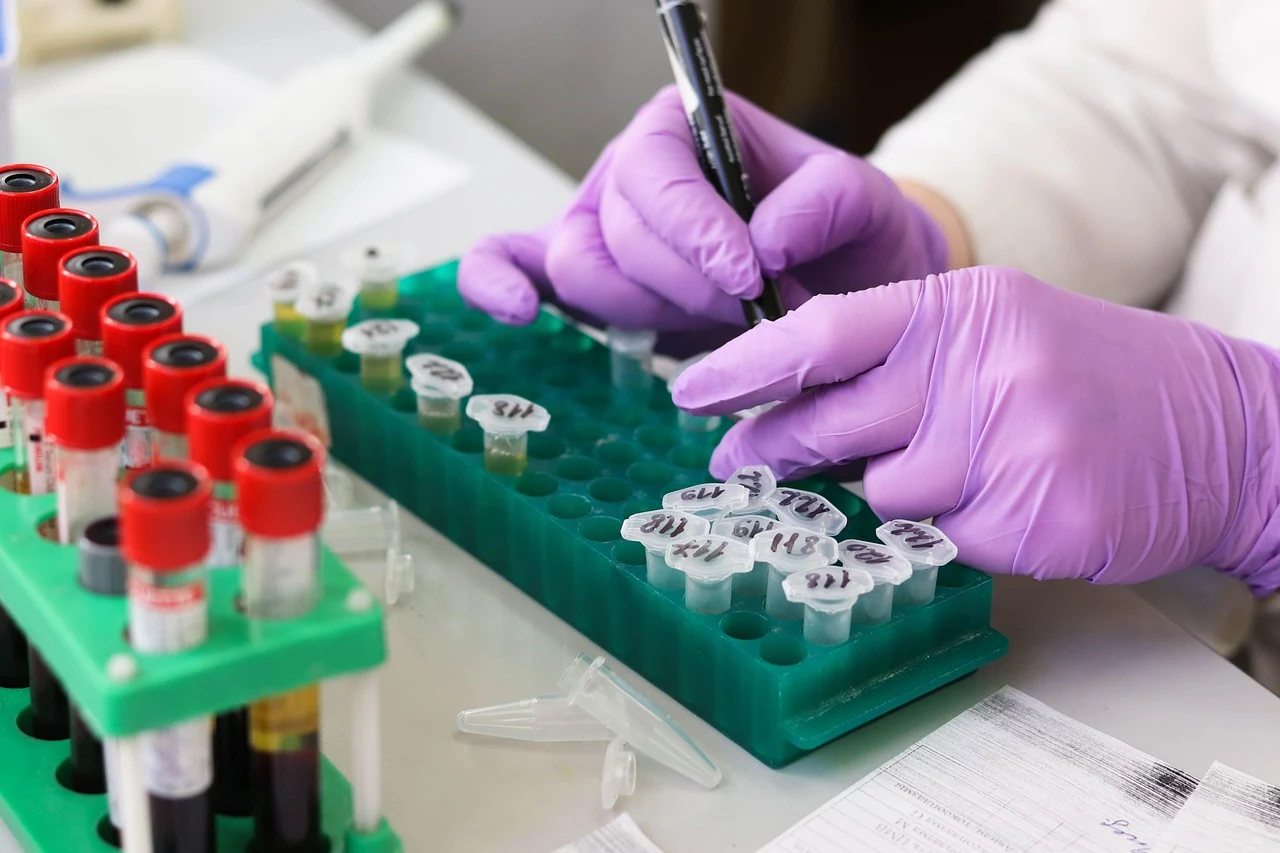

You open a biochemistry report, find the line "total bilirubin," and see a number that means nothing to you. A familiar situation. Let's calmly sort out what this substance is, why it's measured, and how to read the result without unnecessary panic.
What bilirubin is and where it comes from in the blood
Bilirubin is a yellow pigment that forms during the normal breakdown of old red blood cells. More precisely, heme-containing proteins break down: hemoglobin, myoglobin, cytochrome. This happens in the cells of the reticuloendothelial system of the bone marrow, spleen, lymph nodes, and liver, from where the end products enter the bile and are excreted from the body.
The liver produces bile for digestion and removes most of the bilirubin through the bile ducts. If the liver is damaged or the ducts are blocked, the pigment leaks into the blood. When there is too much of it there, jaundice appears: the skin and the whites of the eyes turn yellow.
The conclusion is simple: bilirubin is a standard product of metabolism; the question is always how much there is and why it has increased.
Total, direct, and indirect bilirubin: what's the difference
In the blood, bilirubin exists in two fractions — free (indirect) and conjugated (direct). About 96% is indirect: it is insoluble in water and travels in a complex with albumin. The remaining 4% binds with glucuronic acid — this produces direct bilirubin, which is soluble, filtered by the kidneys, and excreted in urine.
Indirect bilirubin does not dissolve in water and is toxic. Direct bilirubin is low-toxicity, but when the ducts are blocked it is what colors the urine the color of beer. The reference for direct bilirubin is 1.7–8.5 µmol/L, and standard methods often overestimate it.
Conclusion: total bilirubin is the sum of the fractions, and without them the picture is incomplete.
Why a bilirubin test is ordered
The goals: to check the liver, find the cause of jaundice, and understand whether the prescribed treatment is working. Newborns are a separate story: in many healthy babies the liver has not yet learned to remove bilirubin, and jaundice resolves within a few weeks.
A referral is also given based on symptoms: jaundice, dark urine, pale "clay-colored" stool, abdominal pain — this is how hepatitis, cirrhosis, and duct blockage are sought. The test is needed to monitor known liver disease and when excessive breakdown of red blood cells is suspected, such as hemolytic anemia. You may be asked to fast for several hours and to tell about all medications you take, but you must not stop them on your own.
Conclusion: the test is ordered for a specific question, not "just in case."
How to read a bilirubin test result
Reference ranges differ from laboratory to laboratory and depend on sex and age: the reference points for a child and an adult are different. Look at the reference interval on your own report, not at someone else's number from the internet.
An increase (hyperbilirubinemia) occurs in hemolytic anemia, liver disease, and bile duct blockage. A decrease (hypobilirubinemia) usually does not cause concern; it is affected by certain medications — antibiotics, contraceptives, sleeping pills, anticonvulsants. A deviation does not always mean disease: high bilirubin can be caused by certain drugs, foods, and intense exercise. Next, the doctor may order liver function tests, blood protein tests, a urine test, ultrasound, and, if necessary, a liver biopsy. Bilirubin is also measured in urine.
Conclusion: a number without a reference interval and the other tests is not yet a diagnosis.
Causes of elevated bilirubin
There are many causes, and some of them are serious. There are two mechanisms: red blood cells break down too quickly (hemolytic jaundice) or bilirubin is poorly excreted — in hepatic jaundice and duct blockage. The classic causes of jaundice look like this:
- alcoholic liver disease;
- gallstone disease;
- hepatitis;
- pancreatitis;
- sickle cell disease.
When to see a doctor
Yellowed skin and whites of the eyes are a signal that medicine takes seriously: jaundice can be a sign of liver disease and requires urgent care. No "I'll watch it for a week." The same course of action applies to dark urine, pale stool, and abdominal pain. In newborns jaundice is common and usually harmless, but with high bilirubin brain damage is possible, so they are examined for preventive purposes.
Yellowing of the skin and whites of the eyes by itself is not a reason to call an ambulance. 103/112 — for signs of stroke or heart attack.
And lastly, in a fatherly way: this material is for reference, it explains the meaning of the test, but it does not replace a consultation with a doctor who sees you, not a line on a report.
Sources
Update history
Reader reviews
No reviews yet — tell us whether this article was helpful.
Leave a review
This content is for reference and does not replace a doctor's consultation. Medical disclaimer