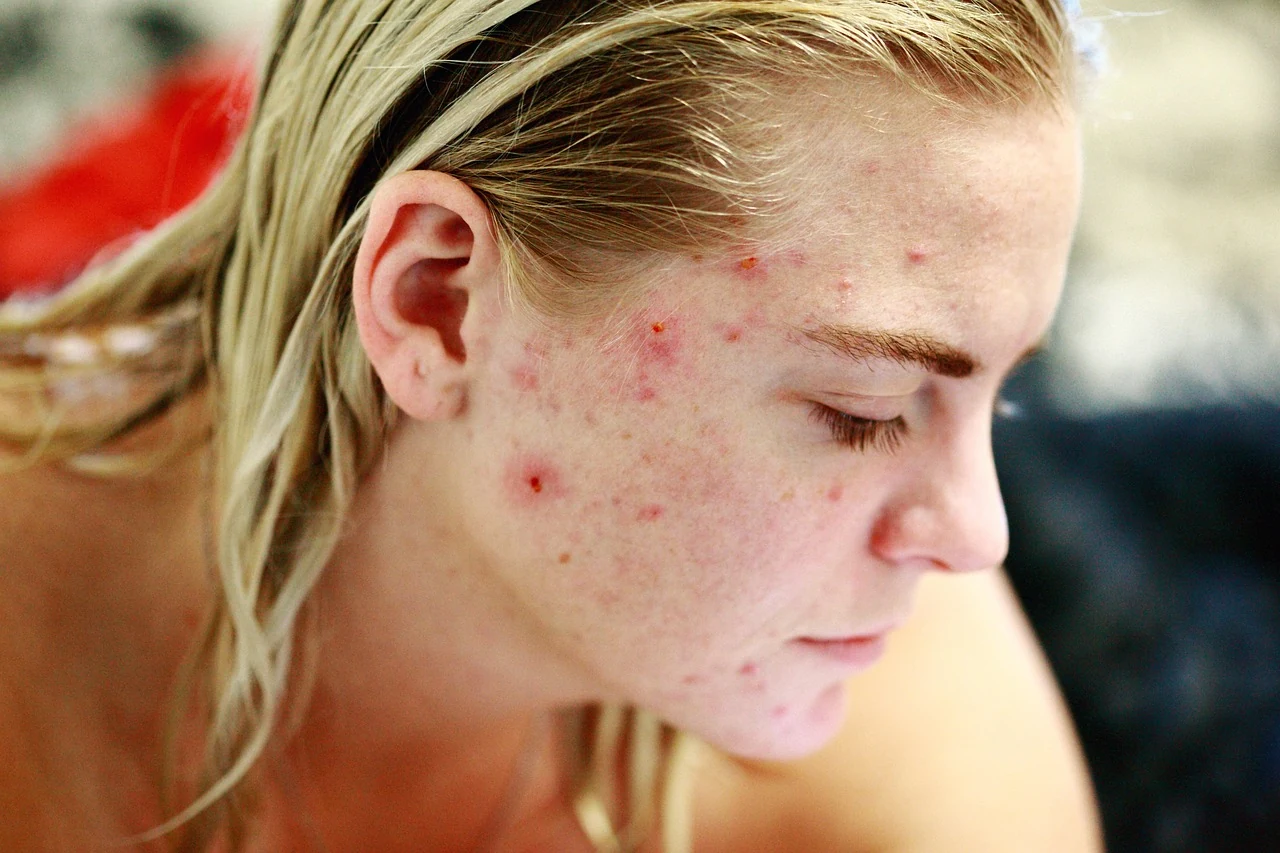

Acne is a chronic inflammation of the sebaceous glands, not a cosmetic defect. Breakouts range from a few pimples to deep, painful nodules, and it is the severity that determines whether skincare is enough or a doctor is needed. Below: the mechanism, the causes, and the line beyond which medical help begins.
What happens in the skin
Acne begins when hair follicles (where hair grows) become blocked by excess sebum and dead skin cells. Bacteria multiply in the blocked opening — they trigger inflammation and pus formation. On the outside this looks like a pimple, while inside an inflammatory process is underway in the sebaceous gland.
Most often the process develops against a background of seborrhea — a condition in which the skin is oily. The location is typical: the face (forehead, nose, chin, cheeks), chest and back, less often the back of the head.
Hormones, age, and what really matters
Acne most often first appears during puberty. The cause is changes in hormonal levels: puberty, the menstrual cycle, pregnancy, menopause.
Causes also include certain conditions: polycystic ovary syndrome and rosacea. Another category is the medications a person takes.
Contributing factors can include nervous exhaustion, gastrointestinal disorders, in particular constipation, hypovitaminosis, endocrinopathies, and poor skin hygiene.
What irritates the skin
Shaving too often and washing the face vigorously can worsen existing inflammation. Tight hats and tight collars are also among the irritating factors.
What breakouts look like
There are several types of pimples, and different ones usually combine on the face. A single lesion progresses from a small inflamed nodule to a pustule.
- whiteheads — small skin-colored nodules, the size of a pinhead, mainly on the cheekbones, less often on the sides of the nose;
- blackheads — black or brown spots, usually flat, sometimes slightly raised, with a black plug at the top;
- papules — raised bumps, pink or red on light skin, brown or purple on dark skin;
- pustules — raised bumps filled with pus;
- nodules and cysts — large formations under the skin that can merge and be painful.
Severity is determined by the number and depth of the lesions. Mild acne means a few pimples; severe acne means deep, painful nodules under the skin. A separate distinction is made between common, keloid, red, necrotic, drug-induced, and occupational acne.
Common acne consists of inflammatory nodular formations in the area of the sebaceous hair follicles. Breakouts run an acute or subacute course and are mainly nodular and pustular. Whiteheads correspond to closed comedones, blackheads to open ones. Acne is distinguished from similar conditions — atheroma, furuncle, carbuncle. Acne-like dermatoses — rosacea and demodicosis — are distinguished from acne.
When a dermatologist is needed
See a doctor if self-care products bring no results, if there are many pimples, if they are deep, painful, or already leaving scars.
Signs of infection are also a reason to seek help: the skin is hot, swollen, red; on dark skin, redness is harder to see.
A separate reason is the psychological impact: acne increases anxiety, contributes to depression, and worsens mood and self-esteem.
If needed, a family doctor refers the patient to a dermatologist.
Acne by itself is not a reason to call emergency services; 103/112 — if the condition is life-threatening, in particular with signs of stroke or heart attack.
Scars and prevention
Acne leaves changes in skin texture and color, as well as scars — shallow pits described as ice-pick or boxcar. Pimples should not be squeezed, as this can lead to scarring.
Prevention is described through risk factors: a person does not choose their age and hormonal changes, while greasy creams, lotions, and cosmetics can worsen the skin's condition.
This material is for reference: it explains the mechanism but does not replace a doctor's consultation.
Sources
Update history
This content is for reference and does not replace a doctor's consultation. Medical disclaimer