
You're running your fifth kilometer, and suddenly your heart seems to stumble — one beat skipped, then a thud. But not every "flutter" is a disease. Let's break down how rhythm is formed, what feels like a palpitation, and when to get an ECG instead of scrolling through forums.
How the heart's rhythm is formed
The heart contracts thanks to its own electrical system — a kind of impulse generator inside the muscle. When this system works smoothly, you feel a steady pulse. When there's a glitch in the electrical circuit, arrhythmia appears — a disturbance of rhythm. One form of arrhythmia is atrial fibrillation (afib, or AF): the heartbeat becomes unstable, and the pulse is irregular.
What feels like a palpitation
Doctors describe palpitations as the sensation when a beat becomes noticeable — in the chest, neck, or throat. It can feel different ways: the heart races or beats very fast; the rhythm is irregular, with skipped or extra beats; it pounds or flutters. This can last seconds, minutes, or longer. In atrial fibrillation, the rate is often over 100 beats per minute. Fatigue is added, exertion becomes harder, and sometimes there is pain or tightness in the chest, shortness of breath, dizziness. It can also be asymptomatic: arrhythmia is found during a routine check-up.
By course, forms are distinguished: paroxysmal — episodes start and pass on their own; persistent — it passes only after treatment; over time, symptoms may become permanent.
When palpitations are normal
Palpitations are common and usually don't mean anything serious. Frequent causes include intense exercise, lack of sleep, stress and anxiety, alcohol, caffeine, nicotine, some medications. Sometimes they accompany menopause or pregnancy. But they can also result from a condition: anemia due to iron deficiency, hyperthyroidism (overactive thyroid), a rhythm disorder, or other heart problems such as valve defects. So if you run ultras and notice palpitations — that's a reason to get checked, not to ignore it.
Myth: if palpitations appear only during exercise, it's always dangerous. Fact: palpitations after exertion are often harmless, but with atrial fibrillation intense exercise can trigger symptoms — so don't "tough it out," but get examined and agree on your exercise load with a doctor.
What increases the risk of fibrillation
It can happen to anyone. But there are factors that increase the likelihood: age 55+ and male sex, excess weight or obesity, smoking, alcohol, some medications (for example, levothyroxine, lithium, or certain asthma medications such as salbutamol). Separately — endurance sports: long-distance running, cycling, skiing.
Fibrillation is often linked to other conditions: high blood pressure, heart failure, mitral valve problems, chronic kidney disease, hyperthyroidism, diabetes, sleep apnea.
Why atrial fibrillation is dangerous
It's not just an unpleasant sensation. Atrial fibrillation increases the risk of blood clots, stroke, and heart failure. Atrial fibrillation cannot currently be fully cured, but treatment selected by a cardiologist helps control symptoms and reduce the risk of complications.
How it is examined
If arrhythmia is suspected, the family doctor refers you to a cardiologist. The cardiologist asks about symptoms, checks the pulse, and orders tests to see the rhythm and rule out other causes:
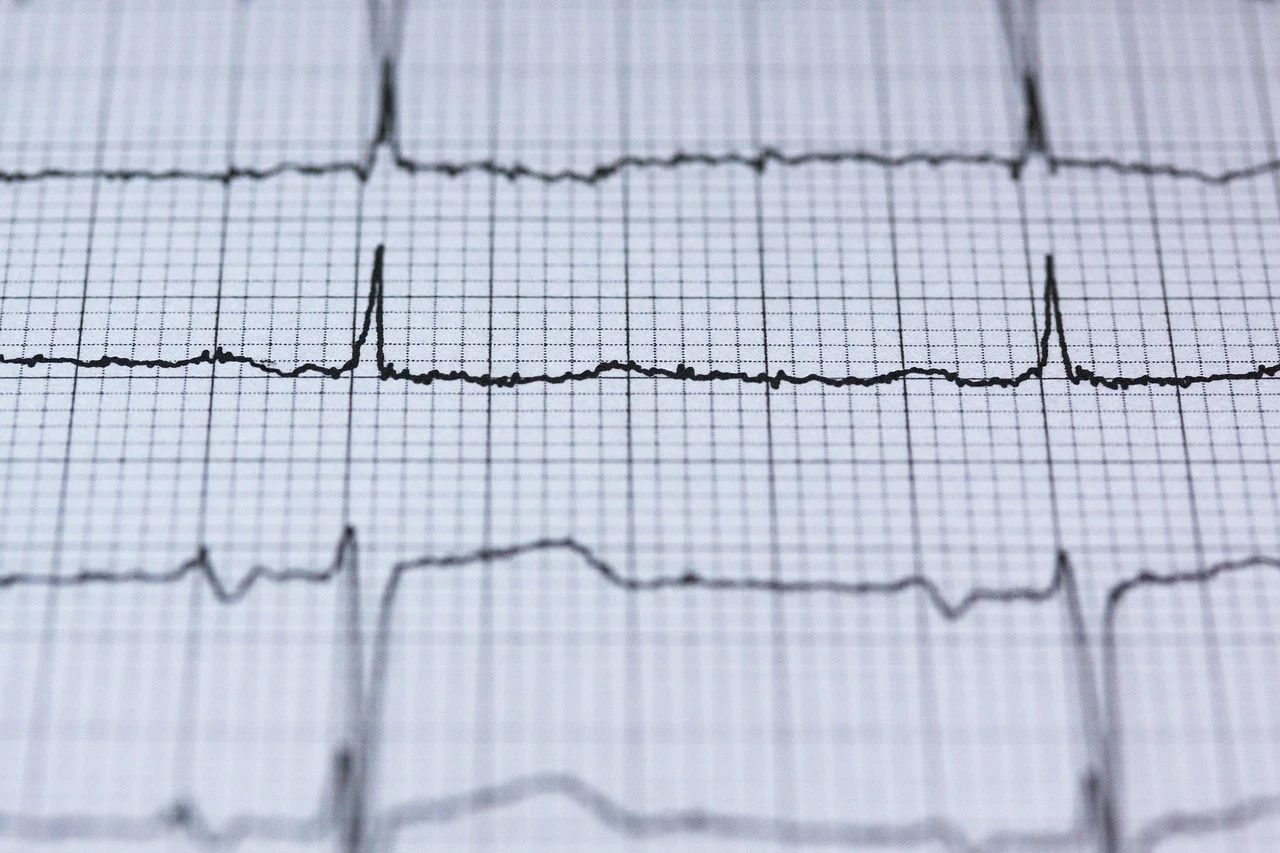
- ECG — electrocardiogram: a recording of the heart's electrical activity.
- Echocardiography (echo).
- Chest X-ray and blood tests.
With atrial fibrillation, regular check-ups are needed to keep symptoms under control.
When to call an ambulance immediately (103 or 112): if you currently have a fast or irregular heartbeat together with chest pain, shortness of breath, sweating, nausea, near-fainting or fainting, a sudden severe headache, weakness or numbness on one side of the face or body, blurred vision, confusion, or difficulty speaking — call 103 or 112 and don't drive yourself.
See a doctor routinely if palpitations recur or become more frequent, last longer than a few minutes, or if you have heart disease or a family history of heart problems. This material is for reference and does not replace a doctor's consultation.
Sources
Update history
This content is for reference and does not replace a doctor's consultation. Medical disclaimer