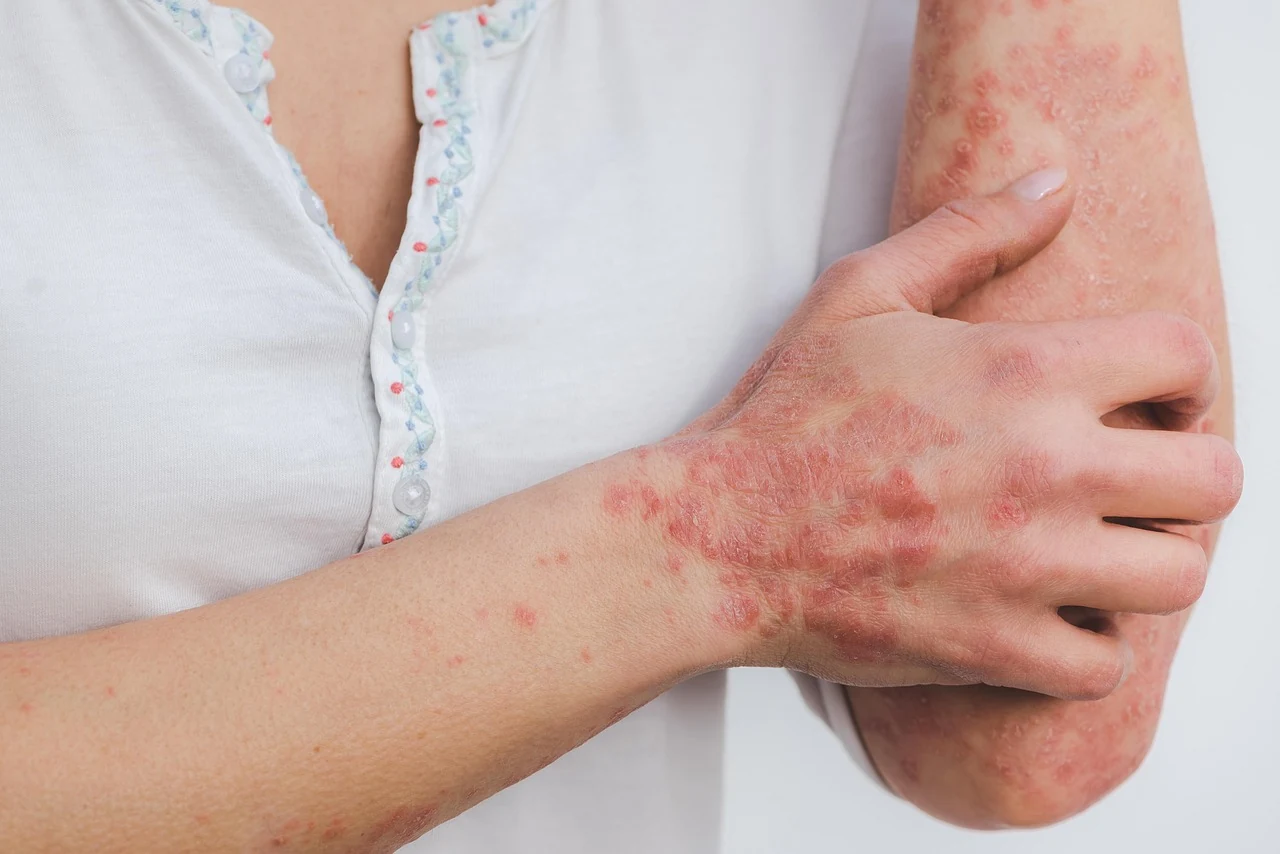

Hives is an itchy rash that usually resolves within a few days. Sometimes swelling occurs alongside the rash—and then every minute counts.
What Is Hives
The main symptom is an itchy rash. It looks like raised welts or spots of various shapes and sizes: they may be on one area of the body or spread all over. The welts itch, burn, or sting. On light skin, the rash is pink or red; on brown and dark skin, its color is harder to see.
Acute and Chronic Forms: Where Is the Line
Quincke's edema lasting less than 6 weeks is acute; more than 6 months is chronic.
Triggers: Food, Medications, Infections, Cold and Heat
Allergic edema is an immune response to an allergen: medications, foods, insect bites. Physical factors—sun exposure, cold, overheating—can accelerate the reaction. Viral infections, giardiasis, and helminth infections contribute. The allergic form is often combined with food allergy, bronchial asthma, hives, and seasonal allergies.
There is also a non-allergic mechanism—a reaction to medications, most often ACE inhibitors. The pseudoallergic form is associated with congenital features of the complement system: in such people, it is activated spontaneously or in response to heat or chemical irritation. Stomach and thyroid diseases—including gastritis and hypothyroidism—can also contribute to edema. Young women and children are most often affected.
Angioedema
Quincke's edema, or angioedema, is a sudden massive swelling of the mucous membranes, skin, and subcutaneous tissue. Most often, the lips, tongue, eyelids, cheeks, hands, feet, and genitals swell; the intestine may also swell—then abdominal pain occurs. If the cause is allergic, there is usually an accompanying raised itchy rash. Everything starts suddenly: from the first symptoms to typical swelling takes from a few minutes to 1–2 hours. The skin in the area of swelling is pale, itching is usually absent, and no pit remains when pressed.
The most dangerous variant is swelling of the larynx and trachea, which occurs in 25% of patients with angioedema. The voice disappears, the tongue turns blue, breathing becomes difficult, the person becomes restless, and loss of consciousness is possible. Swelling of the throat mucosa is an emergency: swelling in the throat can affect breathing. There are five types of edema: allergic, non-allergic, idiopathic, hereditary rare, and acquired rare. Idiopathic angioedema is long-lasting swelling with an unknown cause.
Quincke's edema most often resolves within a few hours or days but can recur periodically. When internal organs are affected, vomiting, diarrhea, and sharp abdominal pain are added. In children, edema more often manifests as demarcated swollen areas on the mucous membranes and skin. The name comes from Heinrich Quincke, who described it in 1882.
When to See a Doctor
You should make an appointment with a family doctor if:
- the rash does not resolve within 2 days;
- the rash spreads further;
- hives return again and again;
- there is a high fever and poor general condition;
- swelling appears under the skin—on the arms, feet, or genitals.
If you are worried about a rash in a child, this is also a reason to seek care urgently.
Call 103 or 112 immediately if the lips, mouth, throat, or tongue suddenly swell; breathing is very fast or difficult—with wheezing, a feeling of suffocation; the throat is tight or swallowing is difficult; the skin, tongue, or lips have turned blue, gray, or pale; the person suddenly becomes very confused, drowsy, or dizzy; has fainted and does not wake up. These are signs of a severe allergic reaction—anaphylaxis—which requires immediate hospital care.
This material is for reference: it explains what can happen and when to seek help but does not replace a doctor's consultation.
Sources
Update history
This content is for reference and does not replace a doctor's consultation. Medical disclaimer