
Rough small pimples on the arms and legs may not be acne but keratosis pilaris — a very common and harmless skin condition commonly called "goose bumps." The bumps usually look like small, painless patches of rough skin. The skin is dry and rough, and the keratosis itself is a very common condition that can last a long time.
What small pimples on the arms are: "goose bumps" and keratosis pilaris
Keratosis pilaris occurs when hair follicles become clogged by a buildup of keratin — the substance that makes up skin, hair, and nails. Why keratin accumulates is not exactly known, but the condition appears to run in families: if your parents have this kind of skin, you may have it too. It is not contagious — you cannot catch it or pass it on to another person.
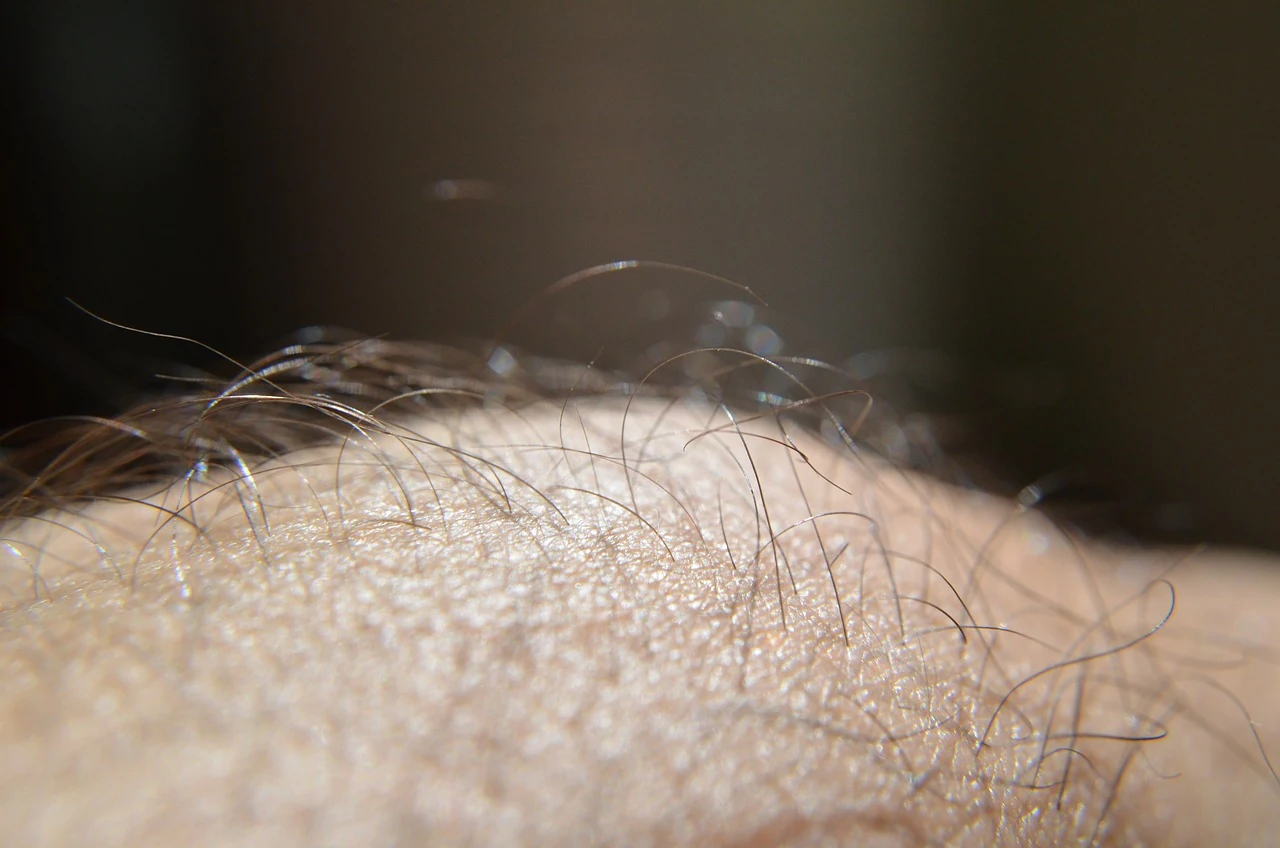
Separately about "goose bumps": this is the everyday name for those little bumps at the base of fine hairs. Physiological "goose bumps" also have another mechanism — the pilomotor reflex to cold or strong emotions, when the muscles of the follicles contract and raise the hairs. In humans this is a rudimentary reflex with no practical purpose.
What small red pimples on the arms and legs look like
They are usually patches of small bumps on the arms, thighs, or buttocks, although they can also appear elsewhere. The bumps are most often skin-colored. On light skin they may be red, on darker skin — darker. The skin is dry and rough. It sometimes itches, the condition is better in summer and worse in winter.
Small pimples on the arms above the elbow or red pimples on the legs do not always mean the same thing — visually similar rashes occur in different conditions, so a doctor makes the assessment.
Why they appear and where most often
The cause is clogging of the follicles with keratin. Typical areas are the arms, thighs, and buttocks. The condition can persist for years and eventually resolve on its own. Keratosis pilaris occurs at any age, and the bumps are usually small and painless.
Acne on the arms and legs: how it differs from goose bumps
Acne appears when hair follicles under the skin become clogged and leads to pimples. In keratosis pilaris the follicles become clogged with keratin, and skin-colored bumps are visible on the skin, which may be red on light skin. The difference is in the mechanism and the appearance of the bumps. If you are looking for an explanation of "acne on the legs" or "acne on the arms," it may be keratosis or another condition that a doctor will assess.
How a doctor makes the diagnosis
The rash is assessed by examining the skin, and if the picture is unclear the doctor may order a skin biopsy.
When to see a dermatologist
You should see a doctor if the skin has become itchy or inflamed, and also if the condition is bothersome and cannot be managed. If you are unsure about the nature of a child's rash, the child should be shown to a doctor.
- itching;
- skin inflammation;
- a rash that does not go away and is bothersome;
- uncertainty about the nature of the rash.
This condition on its own is not a reason to call an ambulance; 103/112 — for life-threatening conditions, for example suspected stroke or heart attack.
This material is for reference: it helps to understand the terms but does not replace a doctor's examination — the final answer about your skin is given by a dermatologist.
Sources
Update history
Reader reviews
No reviews yet — tell us whether this article was helpful.
Leave a review
This content is for reference and does not replace a doctor's consultation. Medical disclaimer