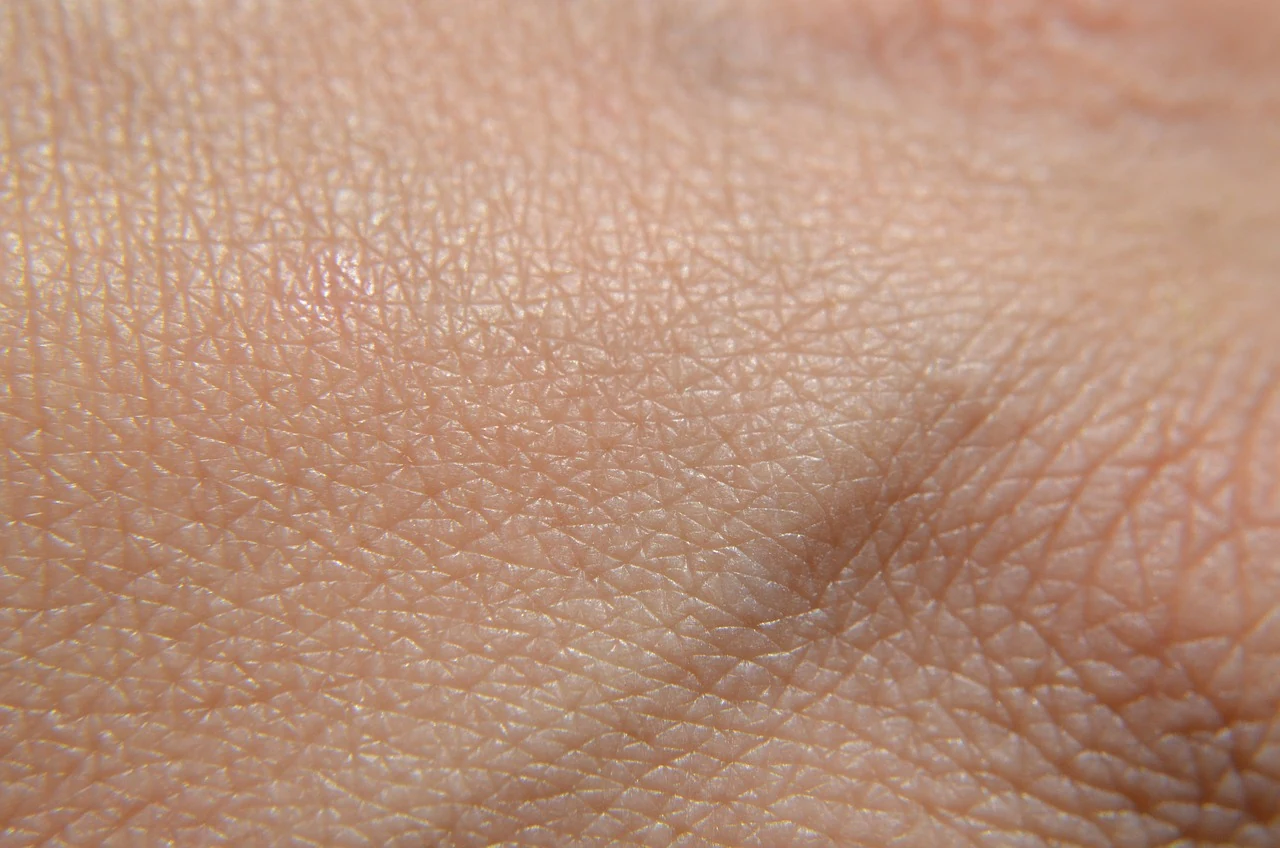

A mole is a small colored spot on the skin, and most people have several. It can look different: flat or raised, smooth or rough, sometimes with a hair. The reason for attention is not the spot itself, but how it changes over time.
What a nevus is and what an ordinary mole looks like
A nevus, or mole, is a congenital or acquired benign formation on the skin in the form of a pigmented spot. It arises from an increase in the number of melanocytes — pigment cells — at the border of the epidermis and the skin. The color ranges from flesh-toned to black, and the surface may be flat, covered with hair, or warty.
An ordinary mole is usually round or oval, with an even edge. On tanned and black skin, moles are usually darker, and the size is normally about the size of a pencil eraser or smaller.
Several things are within the norm: children are born with moles, new moles appear, especially in children and adolescents, with age they may fade or disappear, and during pregnancy they darken slightly.
The ABCDE rule: five details visible to the eye
A — asymmetry: a normal mole is usually round, while melanoma is often irregular, and its two halves differ in outline. B — border: an ordinary mole has an even edge, while melanoma has an uneven one. C — color: a normal mole is usually one color, while melanoma often combines two or more shades and may change color over time. D — diameter: melanomas are usually larger, often over 6 mm, but in the early stage they can be smaller. E — evolution: an ordinary mole does not change over time, while a change in size, shape, or color is a reason to show it to a doctor.
Melanoma: risk factors
Melanoma is a malignant tumor that develops as a result of the malignant transformation of pigment cells, melanocytes. It often forms at the site of a mole, sometimes on unchanged skin, grows quickly, and metastasizes to the nearest lymph nodes and distant organs. Signs of a malignant pigmented spot: increased or decreased pigmentation, enlargement, elevation above the skin level, the appearance within its borders of separate growths, cracks, bleeding, and areas of ulceration.
Risk is increased by white skin, light eyes and hair, pink freckles; a history of sunburns; excessive exposure to ultraviolet radiation, including artificial UV in tanning beds; dysplastic nevus syndrome; a family history of melanoma; multiple moles — more than 50; xeroderma pigmentosum; a personal history of melanoma; age over 50; male sex.
Skin self-examination
Melanoma can appear anywhere, but more often on areas exposed to the sun; rare types occur on the eyes, soles, palms, and genitals. Areas that cannot be seen are examined with the help of a mirror or by asking a partner or friend. Moles are checked regularly.
Sun and ultraviolet
UV radiation from the sun increases the chance that a mole will become malignant, especially in people with a large number of moles. Tanning beds and ultraviolet lamps are a source of the same UV.
Doctor's examination, teledermatology, and warning signs
At an appointment, the doctor asks about how you feel, family history, and symptoms, and examines the mole and other areas of the skin. Sometimes the doctor photographs the spot and sends the image to a dermatologist — this is teledermatology. If melanoma is suspected, the patient is referred to a specialist at a hospital. Early detection makes treatment simpler.
Signs that require a check-up:
- the mole has changed in size, shape, or color;
- the mole hurts or itches;
- the mole is inflamed, bleeding, or covered with a crust;
- a new unusual spot on the skin does not go away within a few weeks, including on the palms and soles;
- a dark area under the nail that is not related to injury.
A mole by itself is not a reason to call an ambulance. Call 103 or 112 if the condition is life-threatening, in particular with signs of stroke or heart attack.
This material is for reference: it describes signs and does not replace a doctor's consultation.
Sources
Update history
This content is for reference and does not replace a doctor's consultation. Medical disclaimer